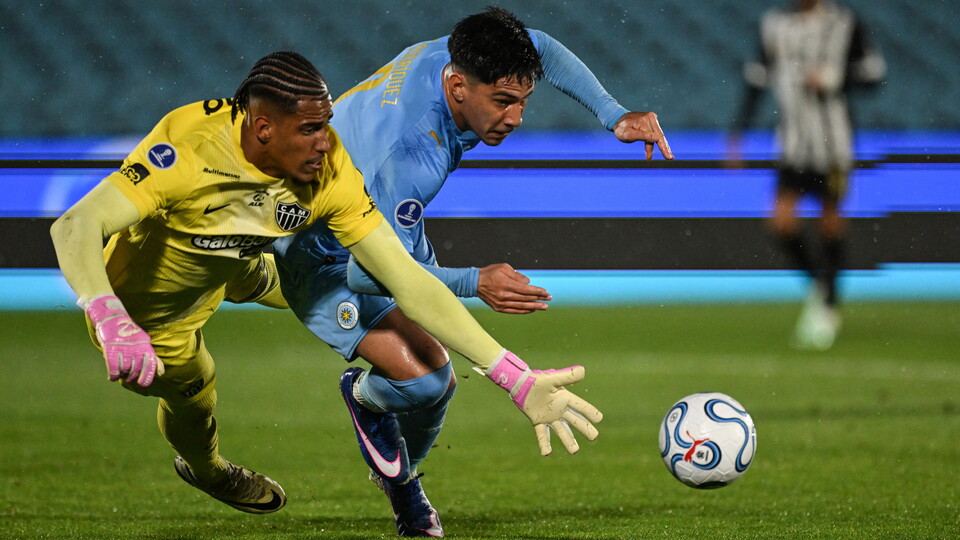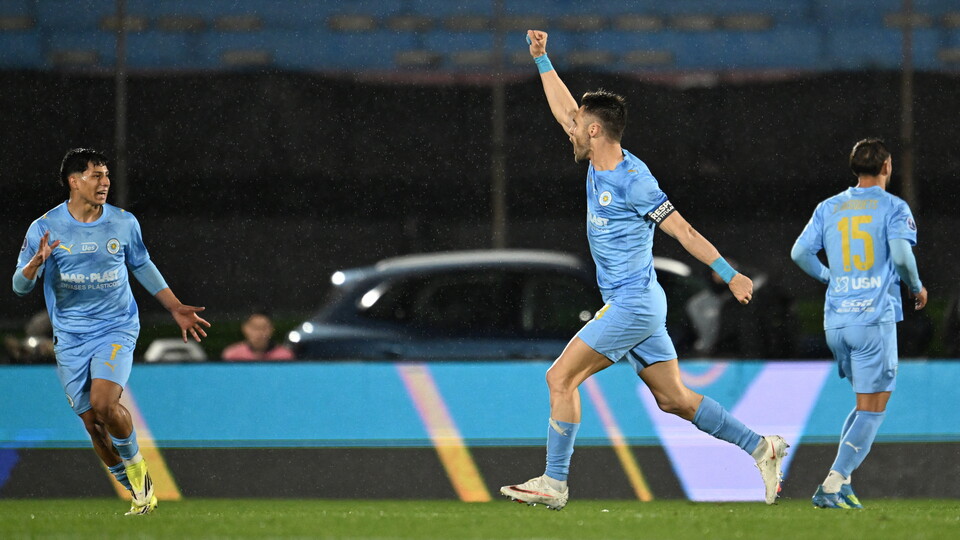
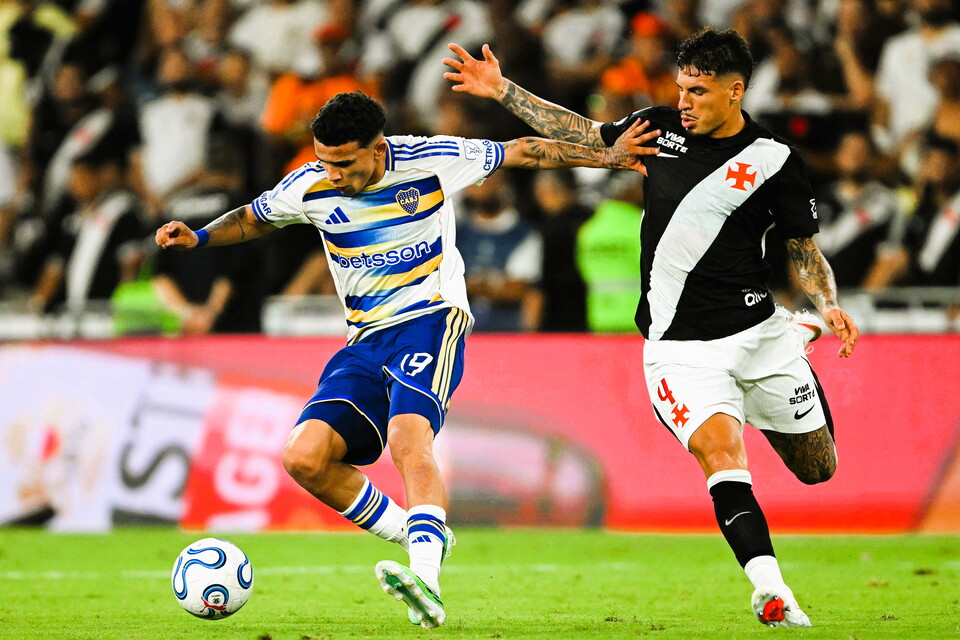
- In the semi-final against Vasco da Gama at the Maracanã, centre-back pairing Lautaro Di Lollo and Facundo ‘Jagger’ Herrera delivered a performance that will live long in the fans’ memories.
- Like Milton Delgado, Tomás Aranda and Leonel Flores, both came through the club’s youth academy, the third-most productive in the world. Since Juan Román Riquelme became a club director, 47 youngsters have made their first-team debuts.
Having just secured a place in the CONMEBOL Sudamericana 2026 final with Boca’s 3-1 victory over Vasco da Gama, Rodolfo ‘El Vasco’ Arruabarrena said at his press conference at the Maracanã: “The boys know how much the youth academy means to me, but I’ll say it again: if they didn’t show me hunger and desire, they wouldn’t get these opportunities. Credit also goes to the club’s youth setup, the coaches, Mariano Herrón, who I’m always bothering and taking players from. To everyone. And I’ll say it again: we haven’t achieved anything yet. We’ve reached a final, and that’s important; we’ll have time to think about it”.
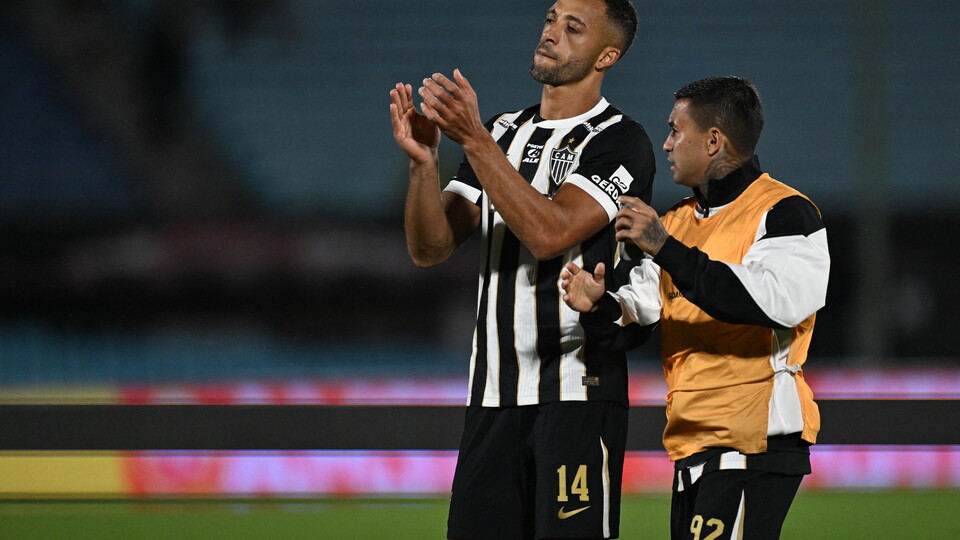
Indeed, Arruabarrena’s Boca — the coach himself a product of the club’s academy — will face Atlético Mineiro in the CONMEBOL Sudamericana 2026 final on Saturday 21 November at the Estadio Metropolitano Roberto Meléndez in Barranquilla. And much of the credit rightly belongs to those youngsters developed at ‘Boca Predio’.
Lautaro Di Lollo, 22, and Facundo ‘Jagger’ Herrera, 20, the centre-back pairing against Vasco, shone on that night at the Maracanã. Di Lollo did more than open the scoring with a header after four minutes. He also excelled with his interceptions, distribution and clearances. Herrera, making his 11th professional appearance, was a rock: strong when covering across and accurate with his passing out from the back. Herrera even joined Di Lollo in his goal celebration, appearing behind him and beating his chest over his heart, or the Boca crest, which might amount to the same thing. Both are youngsters developed at the Ezeiza Training Centre — popularly known as ‘Boca Predio’ — a 40-hectare complex with 14 pitches, 33 kilometres from ‘La Bombonera’, a talent factory supplying the first team for both the present and the future. Days later, Herrera settled the domestic derby against Independiente with a header.

Milton Delgado, 21, Tomás Aranda, 19, and Leonel Flores, also 19, are fellow ‘Boca Predio’ graduates who have delivered outstanding performances for Boca in 2026. Aranda and Flores, who began the year in pre-season training with Herrón’s reserve side, earned call-ups from Lionel Scaloni and made their Argentina debuts: Aranda before the 2026 World Cup, and Flores afterwards. Flores and Aranda are the youngest Boca academy graduates to make their Argentina debuts in the past 32 years. At 19 years and 236 days, Flores was a week younger than Valentín ‘El Colo’ Barco had been on his debut. Barco, now at Chelsea in England, started the CONMEBOL Libertadores 2023 final against Fluminense. Nicolás Valentini, Cristian Medina, Ezequiel ‘Equi’ Fernández and Guillermo ‘Pol’ Fernández also started that 2-1 defeat at the Maracanã, while Luca Langoni and Vicente Taborda came off the bench. All came through Boca’s youth ranks. There is a clear thread of continuity.
Since Juan Román Riquelme took office as vice-president in December 2019 — he is now president — 47 youngsters have made their first-team debuts for Boca. The latest was Rodrigo Bacidalupe, in September. But the work is about more than simply getting them into the first team. Diego ‘Chiche’ Soñora, who oversees Boca’s youth academy alongside Blas Giunta, revealed at the Olé Summit 2026: “As soon as we arrived at the club, the first thing the president said was that he wasn’t concerned about winning: all he wanted was to develop footballers. From the training ground to the finances, across the board, the club wasn’t in a good place. Youth football has changed. We have everything at that wonderful, beautiful training complex. It’s a real pleasure to be there every day and appreciate the surroundings. The boys appreciate it too. We have something that is fundamental: breakfast and lunch for every youngster. Boca provides that support, which is significant and something not everyone can offer. Then there’s all the kit as well. So there are no excuses: we have to work hard, we have excellent coaches, and we also have to go the extra mile. We’ve put in seven years of consistent work”.
Mauro Navas was Arruabarrena’s assistant during his first spell as Boca coach, between 2014 and 2016. So was Diego Markic, who returned with ‘El Vasco’ in 2026. Navas, however, chose to remain in Boca’s youth setup. He joined the academy in 2020, after Riquelme was elected vice-president. He coaches the Novena División, the academy’s youngest age group, for 14-year-olds, the first step on the pathway to the reserves and, ultimately, the first team.
Speaking to CONMEBOL Sudamericana, Navas, who coached Aranda and Flores in the Novena, explains: “We’ve been fortunate enough to see a bit of the world. ‘Boca Predio’ is world-class, with incredible infrastructure and wonderful people, from the cleaning and maintenance staff to those who serve our food. A special spirit has developed, a blend of belonging and professional competition. Boca must be the only club that gives its youngsters so much. I always say that anyone who comes into the training ground will be a different person six months or a year later. It happens to us too. It leaves its mark on us, because of the club’s history and everything that happens in there. Nothing is missing: both the coaches and the boys have everything we need to do things properly. It’s a place where the youngsters can express themselves, and it’s very welcoming. We’re fortunate to have a club that helps with everything and coordinates support of every kind. Any youngster who makes his first-team debut gets there thanks to the club. But those who don’t stay at the club will always be grateful to the academy”.
Navas points out that one reason ‘Boca Predio’ graduates adapt so readily when they make their first-team debuts is their daily contact with professional players, even from the youngest age groups. Di Lollo, Herrera, Delgado, Aranda and Flores all experienced it. Today, the academy youngsters share that environment with them and with Leandro Paredes, another star who came through the club’s youth ranks. They cross paths at the training ground, receive visits from the professionals during training and see them watching their weekend matches at ‘Boca Predio’. Another factor Navas highlights is that most of the age-group coaches are former players who either came through Boca’s academy or played for the club, an approach introduced by Riquelme’s administration. Claudio Morel Rodríguez works with the reserves. Joel Barbosa coaches in the Cuarta División, Clemente Rodríguez in the Quinta, Pablo Ledesma and Daniel ‘Cata’ Díaz in the Sexta, and Antonio Barijho in the Séptima. All won the CONMEBOL Libertadores with Boca. “If anyone has a sense of belonging, it’s the academy youngsters. Seeing a boy make his first-team debut is the greatest title the academy can win,” says Navas, whose playing career included spells in Europe. “That’s a beginning. Then comes establishing himself, which is the hardest part. But it’s a shared source of satisfaction: we all contribute to that boy’s development”.
Just as ‘La Candela’ — the popular name for the training ground Boca used between the 1960s and the 1990s — became a hallmark and a benchmark, today ‘Boca Predio’ supplies the first team with players and sets a standard for youth development. Located in Buenos Aires, Argentina, ‘Boca Predio’ is on a par with the training facilities of Europe’s biggest clubs. A hotel for team stays is currently being built within the complex using the club’s own funds. In the longer term, the next steps are a school and accommodation for academy players. One day, ‘Boca Predio’ could be renamed after Carlos Bianchi, the most successful coach in CONMEBOL Libertadores history, whose titles include three with Boca, in 2000, 2001 and 2003.
On the television screens in the dining hall at ‘Boca Predio’ in Ezeiza, the youngsters watch Martín Palermo’s goals, Riquelme’s skills and Giunta’s tackles as they eat breakfast and lunch — dreaming of, and striving for, a place in the first team. Boca, ranked as the world’s third-best academy by the CIES Football Observatory, won the CONMEBOL Libertadores U-20 in 2023, beating Ecuador’s Independiente del Valle in the final. They then lifted the Intercontinental Cup at that age level against AZ Alkmaar of the Netherlands. Di Lollo, once a ball boy on continental cup nights at ‘La Bombonera’, played in both finals. He already knows what it means to win an international title with Boca. On 21 November in Barranquilla, he will have the opportunity to achieve ‘The Great Conquest’ with the first team, playing a leading role.