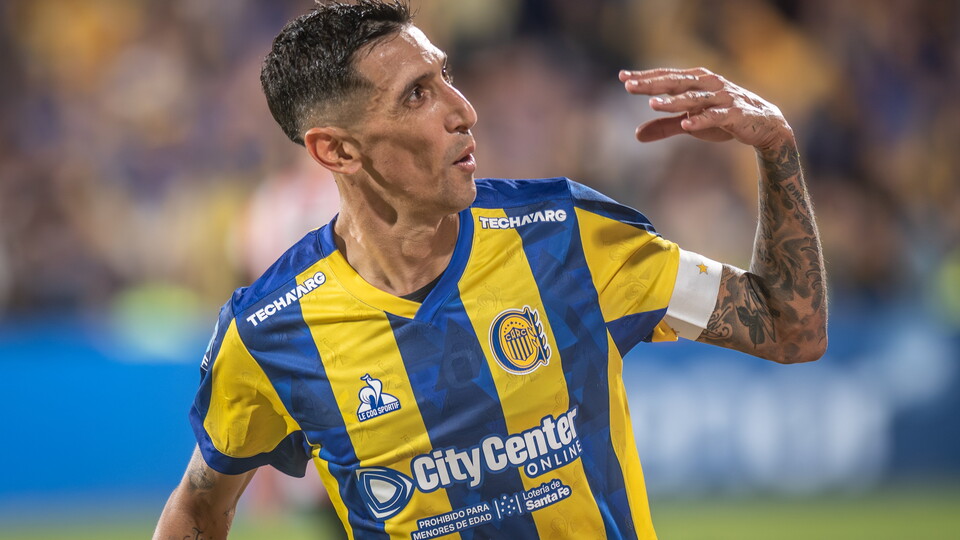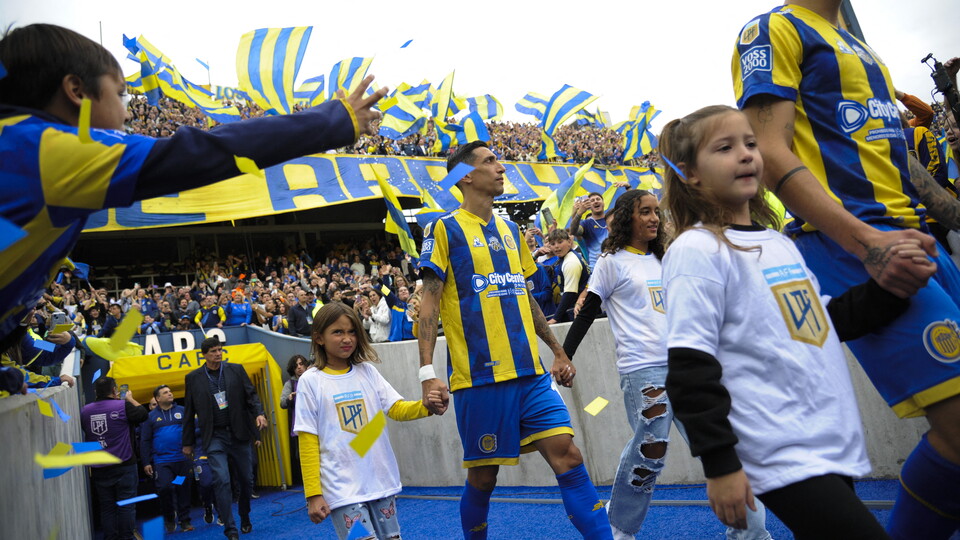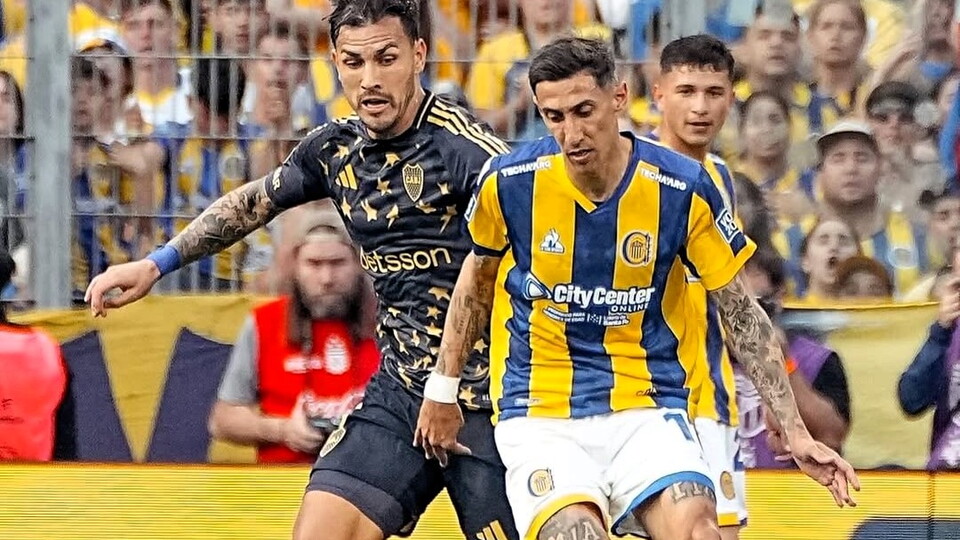
- Leandro Paredes and Ángel Di María, of Boca Juniors and Rosario Central, will grace the 67th edition of the tournament.
- Among Argentines, Brazilians, and one Uruguayan, 50 footballers have won both the World Cup and the CONMEBOL Libertadores.
Leandro Paredes and Ángel Di María, World Cup champions with the Argentina national team in Qatar 2022, will be the players who, in 2026—as stars of Club Atlético Boca Juniors and Club Atlético Rosario Central, respectively—will attempt to join a select group in history: those 50 World Cup winners with their respective national teams who, at some point before or after, also won the CONMEBOL Libertadores.
The 67th edition of South America’s most important club competition will mark Paredes’ (31) debut in the tournament, as between 2010 and 2013—before moving from Boca to AS Roma in Italy—he did not log any minutes in the CONMEBOL Libertadores (he played 31 matches overall, just one in the CONMEBOL Sudamericana, and won the 2011 Apertura and the 2012 Copa Argentina).
Di María (38), on the other hand, played 102 minutes across four matches—always coming off the bench, with no goals or assists—in the Group Stage of the 2006 edition with Rosario Central, before transferring to Benfica in Portugal, his first—and ultimately only—club in Europe. His debut came on February 8, 2006, against Atlético Nacional in Colombia, in a 0–1 defeat for Rosario Central. Six days later, Di María turned 18.
Among the World Cup champions from Qatar 2022, seven have also enjoyed lifting the CONMEBOL Libertadores trophy: Germán Pezzella and Guido Rodríguez with River Plate in the 2015 edition; Franco Armani with Atlético Nacional in 2016 and with River in 2018, a campaign that also featured Gonzalo Montiel, Exequiel Palacios, and Julián Álvarez. To this group of 26 Argentine World Cup winners from Qatar, we must also add Ángel Correa (champion with San Lorenzo in 2014) and Thiago Almada (Botafogo, 2024).
Of the 22 World Cup champions from Argentina 1978, nine achieved the double glory: Rubén Pagnanini and Héctor Baley (Estudiantes de La Plata, 1969–70); Rubén Galván (four-time champion with Independiente, 1972–73–74–75); Daniel Bertoni (Independiente, 1973–74–75); Alberto Tarantini (Boca, 1977); René Houseman (Independiente, 1984); Jorge Olguín (Argentinos Juniors, 1985); and Américo Gallego and Norberto Alonso (River, 1986).
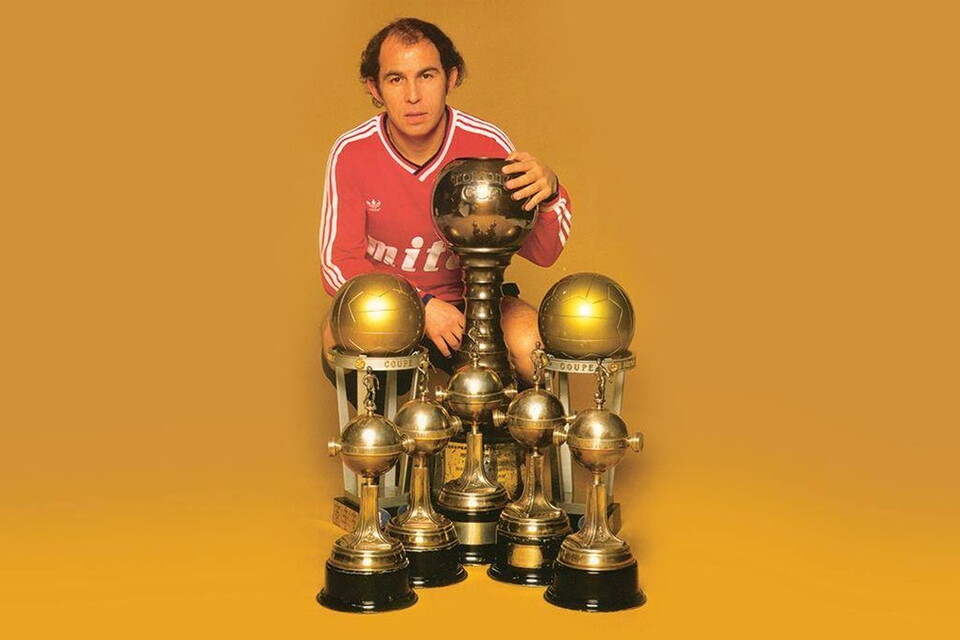
Among the 22 World Cup champions from Mexico 1986, there are another nine: Ricardo Bochini (five-time champion with Independiente, 1972–73–74–75 and 1984); Jorge Burruchaga, Ricardo Giusti, and Néstor Clausen (Independiente, 1984); Sergio Batista and Claudio Borghi (Argentinos Juniors, 1985); and Oscar Ruggeri, Héctor Enrique, and Nery Pumpido (River, 1986). Di María and Paredes will aim for their path to lead them to the final on November 28. For now, 25 Argentine players have won both trophies.
If we turn to Brazil, the list of players who won both the FIFA World Cup and the CONMEBOL Libertadores expands, led by Pelé (Sweden 1958, Chile 1962, and Mexico 1970; champion with Santos in 1962 and 1963), the only player to have won three World Cups. He is followed, among the champions of Sweden 1958 and Chile 1962, by Gilmar, Zito, Pepe, and Mauro Ramos (Santos, 1962–63); as well as World Cup winners in Chile such as Coutinho and Mengálvio (Santos, 1962–63). Among the champions of Mexico 1970, Pelé is joined by Jairzinho and Wilson Piazza, who achieved ‘Eternal Glory’ with Cruzeiro in 1976.
Among the Brazilian World Cup champions from the United States 1994, Zetti, Ronaldão, Raí, and Müller had already won back-to-back CONMEBOL Libertadores titles with São Paulo (1992–93). Zinho, a World Cup winner in 1994, later became South American champion with Palmeiras in 1999. Cafú (São Paulo, 1992–93) was the only member of the 1994 World Cup-winning squad who was also part of the champions in Korea–Japan 2002, Brazil’s most recent World Cup triumph.
From that 2002-winning team, the following players also won the CONMEBOL Libertadores: Juninho Paulista (São Paulo, 1993), Rogério Ceni (São Paulo, 1993 and 2005), Dida (Cruzeiro, 1997), Marcos (Palmeiras, 1999), Roque Júnior (Palmeiras, 1999), Júnior (Palmeiras, 1999, and São Paulo, 2005), Gilberto Silva and Ronaldinho (Atlético Mineiro, 2013), and Luizão (Vasco da Gama, 1998, and São Paulo, 2005). Altogether, there are 24 Brazilian players who have achieved this distinction.
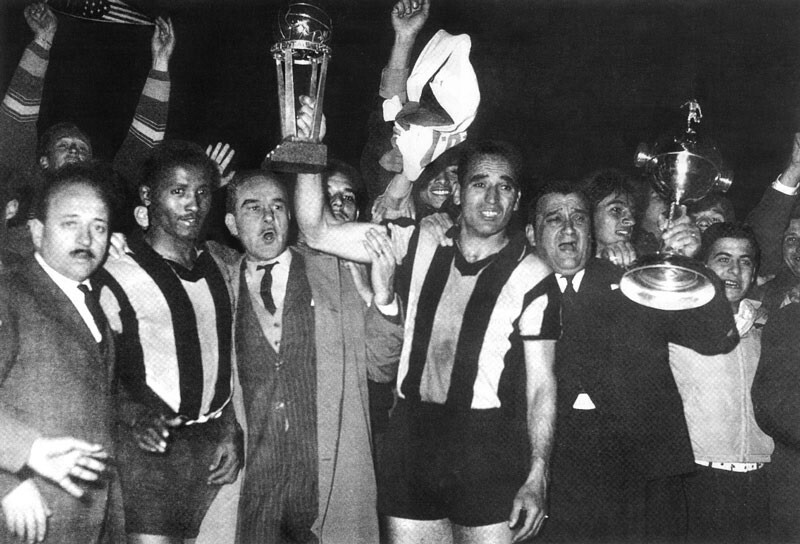
Football, at times, is a paradox. Diego Maradona did not log any minutes in the CONMEBOL Libertadores, Ubaldo Fillol and Daniel Passarella were unable to achieve the feat on the continent, and neither was Mario Kempes, who did score goals in the competition with Rosario Central and River Plate. Yet, in a unique, pioneering case, Uruguay’s William Martínez first became a World Cup champion with Uruguay in the Maracanazo of Brazil 1950 and later lifted two CONMEBOL Libertadores titles as captain of Peñarol, in 1960 and 1961.
Upon their respective returns, Di María took Rosario Central to the top of the 2025 Argentine football standings, while Paredes led Boca Juniors to second place in the annual table. In doing so, they secured qualification for the CONMEBOL Libertadores for the clubs of their lives and passions. Di María and Paredes will aim to add their names to this distinguished list.