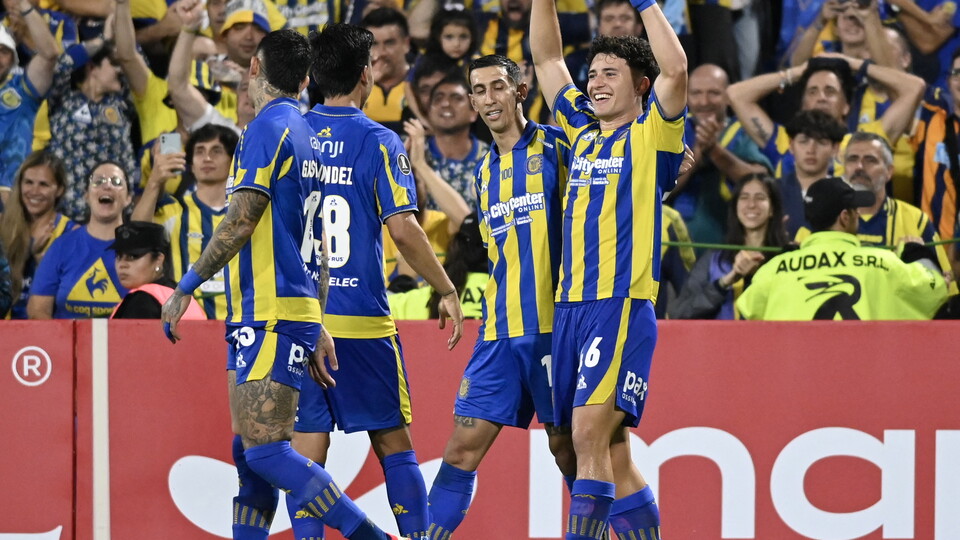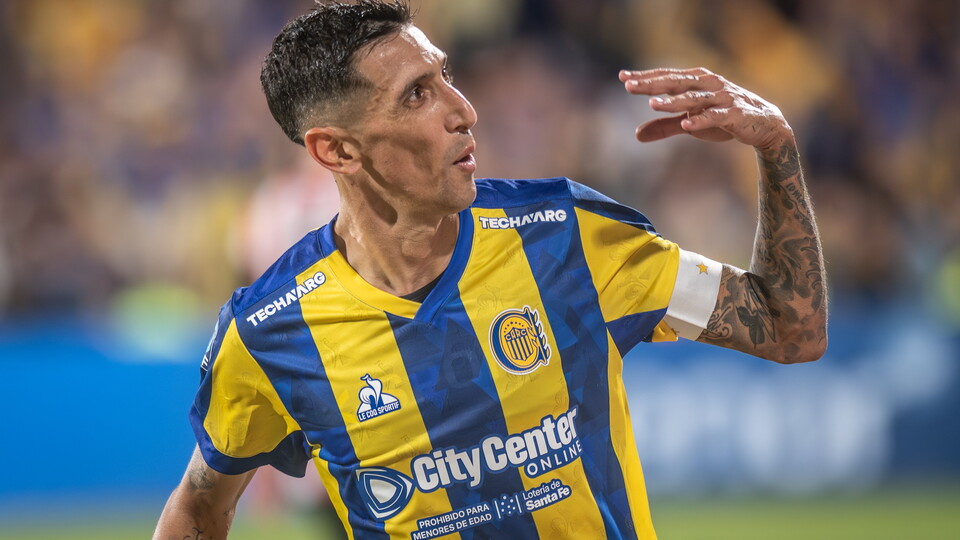
- Only five players in history have managed to win the FIFA World Cup, the UEFA Champions League, and the CONMEBOL Libertadores.
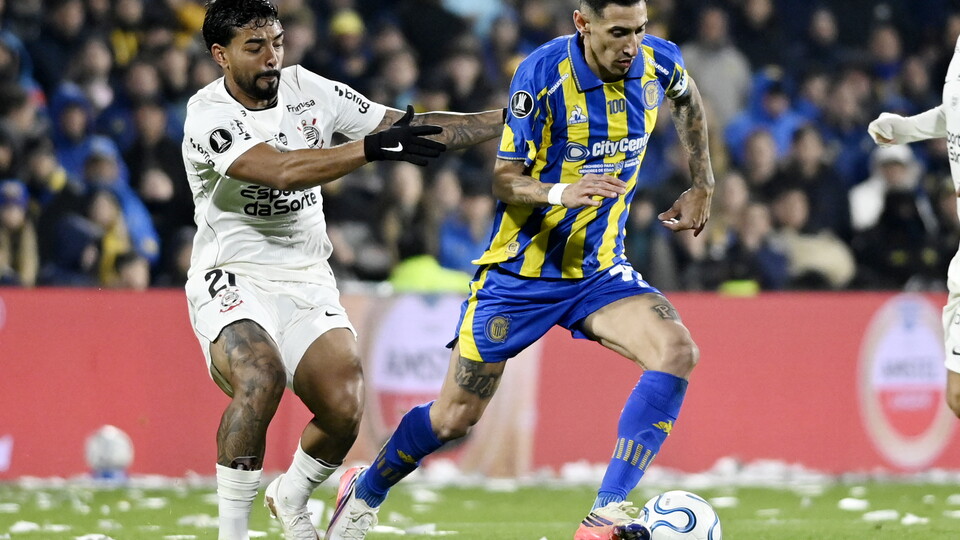
- Ángel Di María will look to join that exclusive group with Rosario Central in the 2026 edition.
After so many triumphs and titles, Ángel Di María has lost none of his hunger. His return to Rosario Central—the club that developed him—is the perfect closing chapter to a dream career. Back home and reigniting the spirit of the club, ‘Fideo’ became a transformative force, turning the Rosario side into the most consistent team of 2025 and leading them to the top of Argentina’s annual standings.
That outstanding campaign secured direct qualification for the CONMEBOL Libertadores group stage, where on March 19 he will learn the first three opponents on his path. For Di María—and for the entire ‘Canalla’ faithful—it will be a special night: the first step toward achieving one of the few goals still missing from his remarkable career.
Months before finalizing his return in May 2025, Di María allowed himself to dream big: “I’d love to play in the Libertadores again with Central. I played it once when I was 17—I was very young and couldn’t fully experience it. Winning it would be a dream, something truly special. Lifting a title with Central is something I really want, but winning the Libertadores wouldn’t just be a dream—it would be more than that. It would be historic, the perfect ending to my career.”
At 37, the Rosario native has chosen the most demanding path: to compete, to lead, and to dream big. Every match at the Gigante de Arroyito is a celebration, but also a statement of intent. Di María did not return for a farewell tour filled with tributes—he came back to leave a lasting mark. And in that pursuit, the CONMEBOL Libertadores stands as the ultimate challenge, the final great chapter of a story that, true to its protagonist, still has golden pages left to be written.
Because Di María is no stranger to glory: with Real Madrid, he won the Champions League as the standout performer in the final against Atlético de Madrid, and with Argentina, he lifted the long-awaited World Cup, scoring in the dramatic final against France. ‘Angelito’ has a habit of delivering on the biggest stages, and he will look to replicate those feats in the upcoming edition of the CONMEBOL Libertadores. Should he conquer South America as well, he would join an exclusive group of players who have won all three of football’s greatest titles.
Only five players have achieved that rare feat. As Di María aims to etch his name into that elite list—with others also eyeing the possibility at the upcoming international tournament set to begin in mid-June—we take a look at the select group that has already reached footballing immortality.
Julián Álvarez
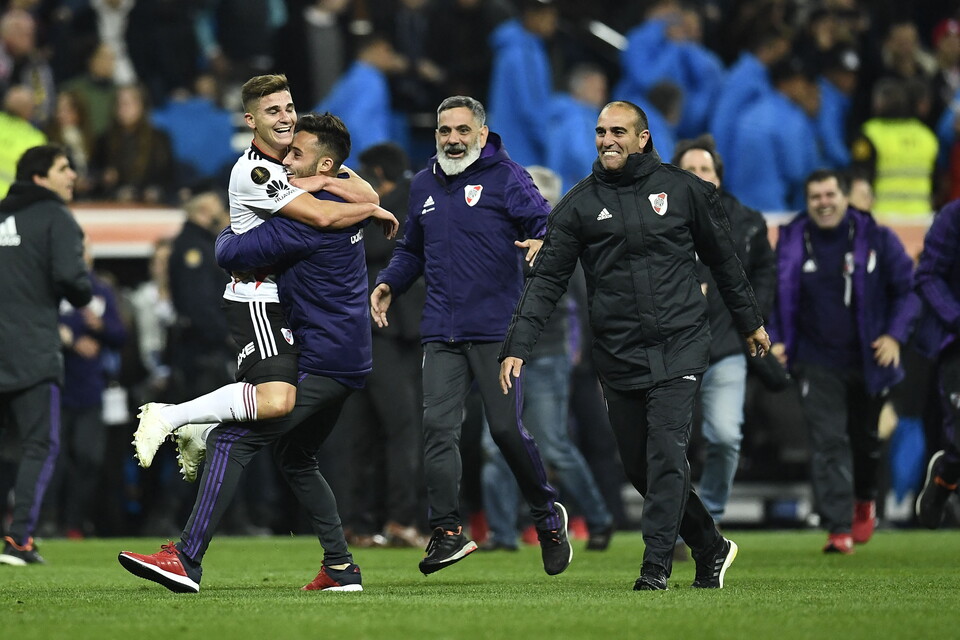
He was the most recent addition to the list—and the first Argentine to achieve the treble. Since breaking into the first team with River Plate in 2018, he has built a winning pedigree defined by titles and decisive performances. Marcelo Gallardo quickly placed his trust in his talent, including him in the 2018 CONMEBOL Libertadores final against Boca Juniors, where River secured a historic triumph over their fiercest rivals. From that moment on, his rise was meteoric: he became a key figure, a prolific scorer, and the attacking leader of the Núñez side that won the domestic title in 2021 before his move to England.
His transfer to Manchester City propelled him to the very top of European football and, under Pep Guardiola, he was part of the squad that lifted the 2022/23 UEFA Champions League, establishing himself as a valuable component of a relentless City side that defeated Inter 1-0 in the final in Istanbul. In Manchester, Álvarez showcased his versatility—capable of leading the line in the absence of Erling Haaland or adapting to different attacking roles within the system.
Months earlier, at Qatar 2022, he had already played a crucial role in Argentina’s World Cup triumph, delivering goals and standout performances at key moments. With four goals in seven matches, he scored in the final group-stage game against Poland, netted against Australia in the round of 16, and produced a memorable brace in the 3-0 semi-final victory over Croatia.
Ronaldinho
A symbol of the joy and magic of Brazilian football, Ronaldinho built a dazzling career that also secured him a place in this exclusive group. A World Cup winner with Brazil at Korea–Japan 2002, he was a central figure in one of the most talented generations in the history of the Seleção. ‘Dinho’ formed part of a dream attacking trio alongside Rivaldo and Ronaldo, leading the Verdeamarela to their fifth world title.
His European crowning moment came with Barcelona, where he reached the summit in the 2005/06 UEFA Champions League, defeating Arsenal in the final. He was the standout figure in a team that defined an era through its style and global impact. While Lionel Messi was taking his first steps in the senior side, the Brazilian star was the undisputed leader of Frank Rijkaard’s squad. His dribbles, his flair, and his goals left an indelible mark on the football world.
In the latter stages of his career, after spells with AC Milan and Flamengo, he joined Atlético Mineiro and fulfilled a long-standing ambition: in 2013, he lifted the CONMEBOL Libertadores in an unforgettable campaign marked by dramatic comebacks built around his leadership, both on and off the pitch.
Named the tournament’s best player, he was instrumental in a ‘Galo’ side that defeated São Paulo in the round of 16, overturned a three-goal deficit against Tijuana in the quarter-finals, came from behind after a defeat in Rosario against Newell’s to force a penalty shootout in the semi-finals, and repeated the feat in the final against Olimpia. After losing 2-0 in the first leg in Asunción, Atlético Mineiro leveled the tie in Belo Horizonte and claimed the trophy on penalties.
Cafu
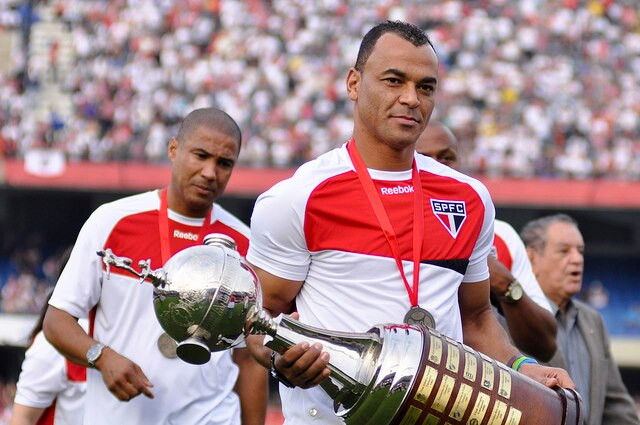
An eternal captain, an unquestioned leader of the Brazilian national team, and widely regarded as one of the greatest full-backs in history, Cafu built his legend through consistency, commitment, and an unbreakable competitive mindset. His first major continental success came in 1992 with São Paulo, where he was part of a dominant side that would go on to repeat the feat in 1993. Under Telê Santana, that iconic team ushered in a golden era, also claiming the Intercontinental Cup by defeating both Barcelona and Milan, champions of Europe.
On the global stage, his crowning achievement arrived at Korea–Japan 2002, where he lifted the World Cup as captain, embodying leadership and relentless consistency down the right flank. In Europe, his legacy was cemented with AC Milan, where he won the 2006/07 UEFA Champions League against Liverpool, contributing experience, energy, and composure in decisive moments. Cafu not only completed the treble—he did so as a central figure across different eras and teams, solidifying his place among the greatest full-backs of all time.
Roque Júnior
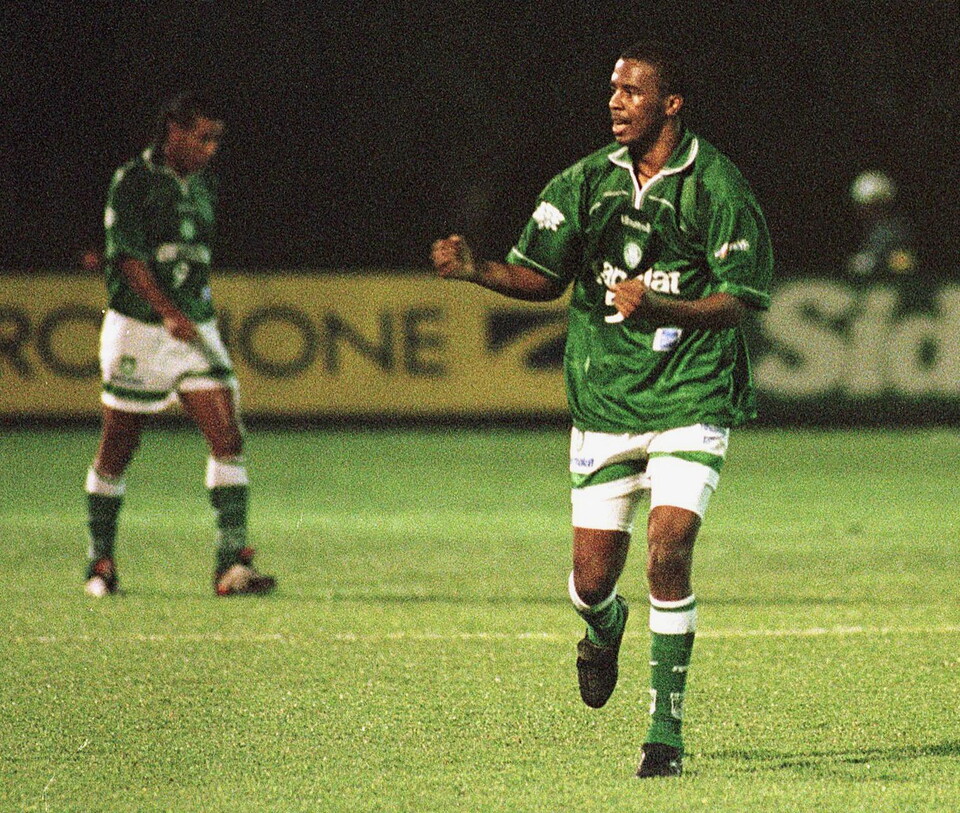
A rugged, strong-willed defender, Roque Júnior is also part of this exclusive group, having built a career defined by solidity and reliability in decisive moments. His first major title came with Palmeiras in the 1999 CONMEBOL Libertadores, where he played a key role in a campaign that remains etched in the club’s history and scored a crucial goal in the semi-finals. Verdão, a regular contender, lifted their first continental crown in a memorable run that included victories over Vasco da Gama, Corinthians, River Plate, and Deportivo Cali in the final—where Roque Júnior converted one of the penalties in the decisive shootout.
His performances earned him a move to Europe, where he went on to win the 2002/03 UEFA Champions League with AC Milan, gaining experience at the highest level of club football. That same year marked the peak of his career, as he became a World Cup champion with Brazil in 2002, starting in a memorable back line alongside Lúcio and Edmílson. Roque Júnior built his legacy on defensive resilience and a proven ability to deliver on the biggest stages.
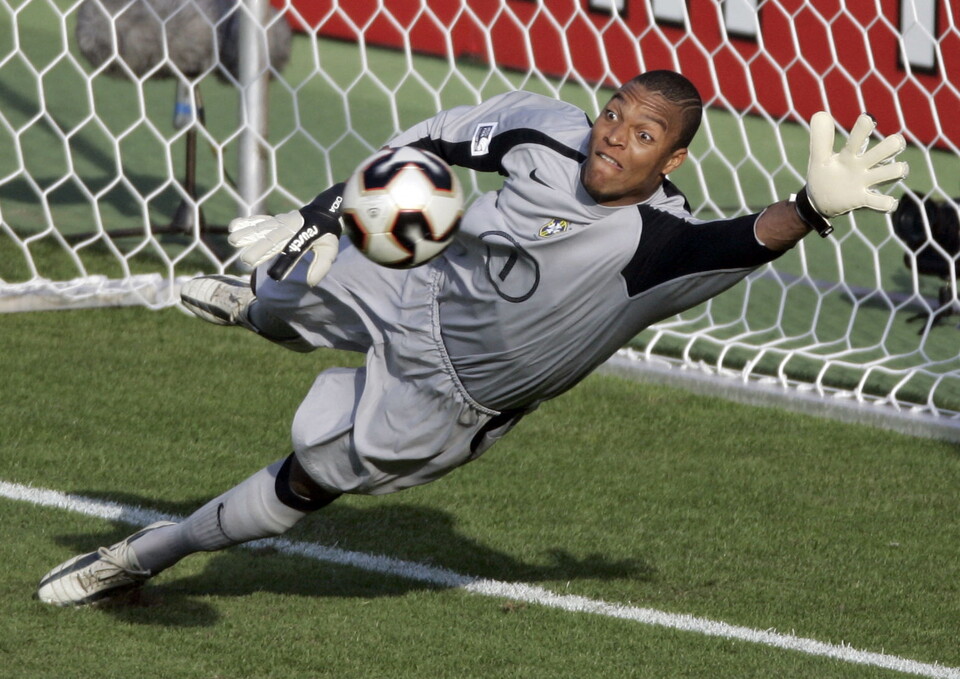
Dida
Renowned for his extraordinary reflexes and composure between the posts, Dida was the last line of defense for some of the most successful teams of his era. His path to the treble began in Brazil, where he won the CONMEBOL Libertadores with Cruzeiro in 1997, showcasing the qualities that would soon take him to the elite of European football.
His golden years came at AC Milan, where he lifted the UEFA Champions League in 2002/03 and 2006/07, playing a decisive role—particularly in penalty shootouts and high-pressure encounters. At the same time, he was part of Brazil’s 2002 World Cup-winning squad, contributing to one of the most iconic teams in the nation’s history.
With poise and efficiency, Dida crafted a career that firmly places him among the most outstanding goalkeepers of his generation.