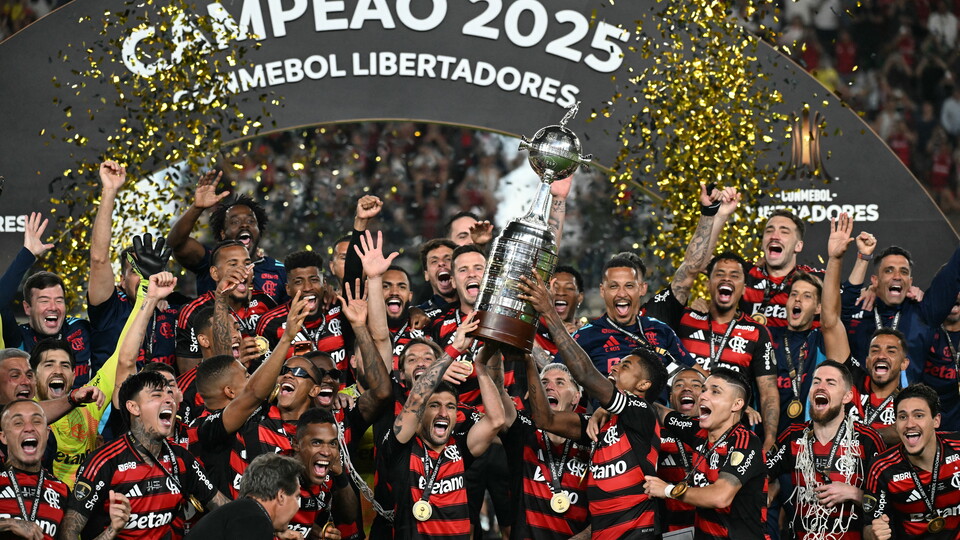
- Estudiantes are back in the CONMEBOL Libertadores Semifinals after a 17-year absence and will face Flamengo.
- From Oscar Malbernat to Guido Carrillo, a journey through the “mystique” that defines ‘El Pincha’ whenever they take the stage in the Copa.
The question resurfaces every time Estudiantes de La Plata win a tight contest — and in the CONMEBOL Libertadores, that happens often. On 16 September at the Neo Química Arena, Alexis Castro scored in the 87th minute, Memphis Depay sent a penalty over the crossbar moments before the final whistle, and ‘El Pincha’ reached the Copa Semifinals for the first time since 2009. In the post-match press conference, captain Guido Carrillo was asked whether the club’s mystique had played a part. “It was intelligence and personality that came into play,” he replied.
It is just one more definition. There are dozens of them. What follows is an attempt to put them in order, with names and dates, because the ‘Pincha’ mystique may carry the aura of legend, but the testimony of those who lived it makes it feel real — at least in La Plata.
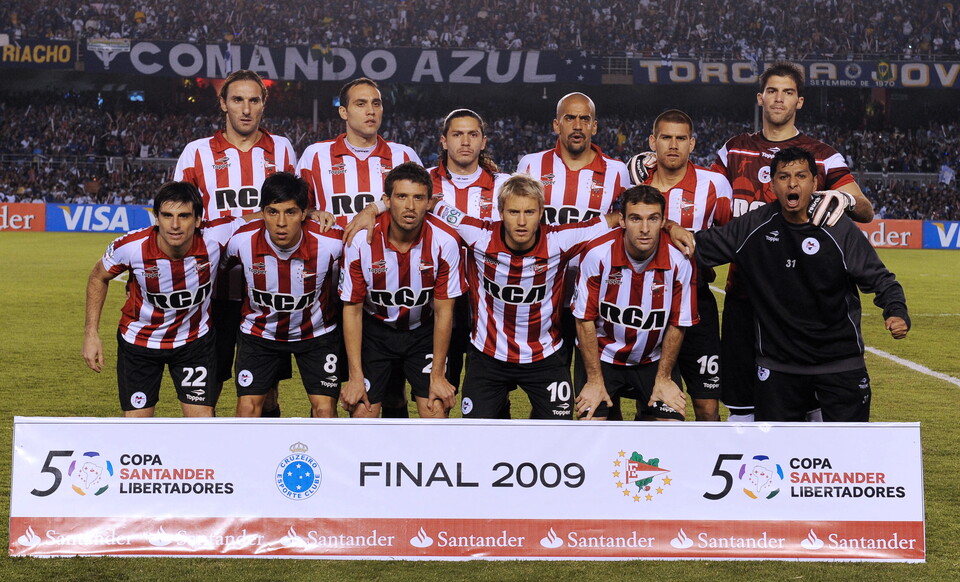
Alejandro Sabella, the coach who led the club to its most recent Gloria Eterna triumph in 2009, offered one of the most famous explanations of the concept in an interview with El Gráfico: “It is difficult to define something that you can feel, sense and breathe. Mystique is a way of thinking; it is players coming into the dining room in flip-flops to ask for water for their mate, the pictures hanging at the training camp, the names of Zubeldía and Prátola on plaques that give different places their identity. In short, it is about feeling identified with a club. Estudiantes is a big club and a small club at the same time, a mix of a giant and a family that is difficult to explain.”
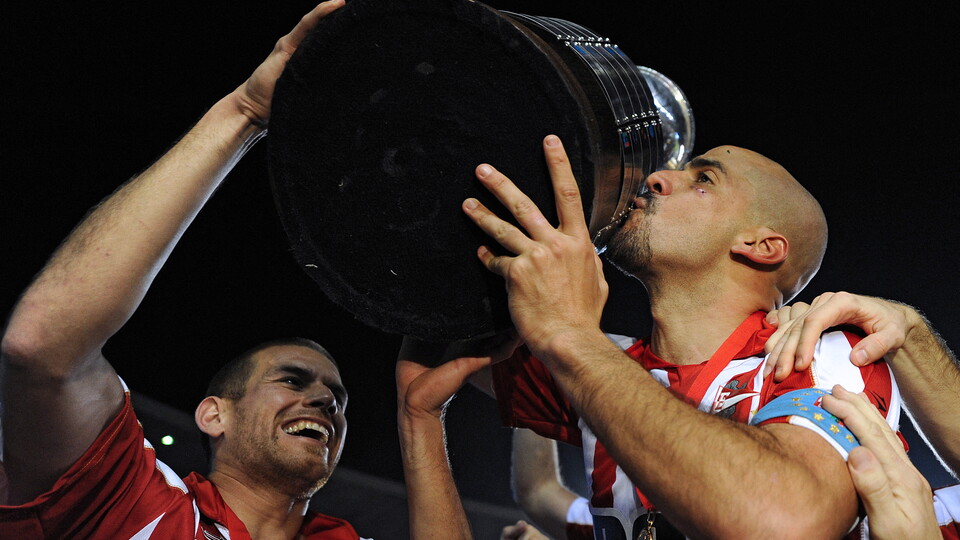
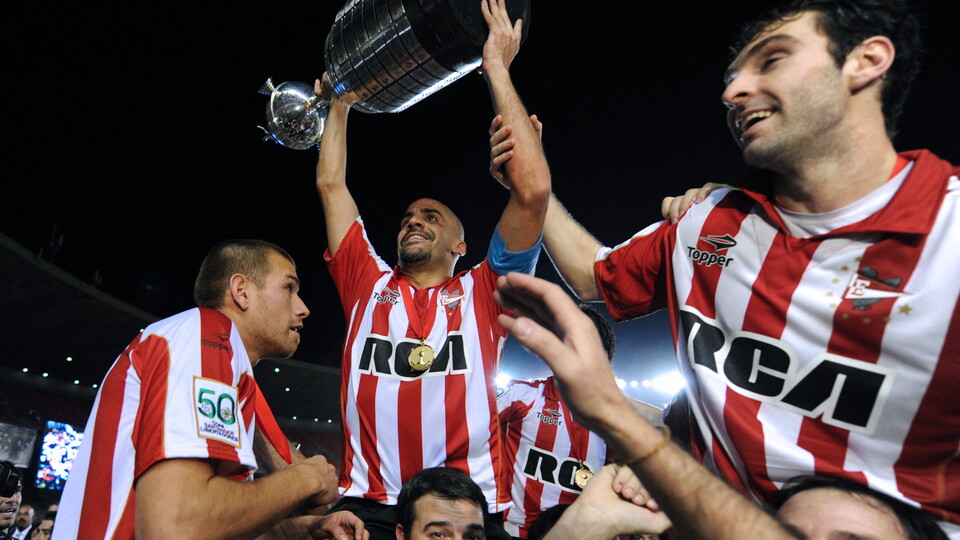
The Final against Cruzeiro that gave ‘El León’ their most recent continental title has its own chapter in that story of mystique. After the first leg ended goalless at the Estadio Único, the Argentine side came from 1-0 down at the Mineirão to win with goals from Gastón Fernández and Mauro Boselli. Juan Sebastián Verón, the club’s current president, played the full 90 minutes and, a decade later, remembered that night as bringing together “grandparents, parents and children in an endless embrace”, as he told Olé. His father, Juan Ramón Verón, was a key figure in the Estudiantes side that won three consecutive CONMEBOL Libertadores titles between 1968 and 1970.

If there is a sporting origin to that identity, 1968 inevitably stands out as the starting point. Captain Oscar Malbernat, reflecting on the defeat in the second leg of that year’s Final, explained to Clarín half a century later: “At that stage, we were hit hard by the 3-1 defeat to Palmeiras at the Pacaembu. After the match, we admitted that the atmosphere, the noise beforehand, had affected us too much; we had switched off. So we started using the strategy of going out onto the pitch earlier, taking in the pressure. We turned the pressure against us into something positive.”
After that 3-1 defeat and the 2-1 win in the first leg in La Plata, the tie moved to a third and decisive match at the Centenario in Montevideo. In the Uruguayan capital, Estudiantes won 2-0 to claim their first CONMEBOL Libertadores title. It was the beginning of an era that would leave a lasting mark on South American football. ‘Cacho’ himself offered a little more insight into that foundational identity: “We weren’t anti-football, we were uncomfortable to play against. That team never gave up. We never celebrated anything, never.”
Osvaldo Zubeldía, the architect of that side, told Sport magazine in 1968, shortly after winning the CONMEBOL Libertadores: “It has always been said that Argentinians do not know how to mark, and I do not understand why some people are bothered because Estudiantes do it. The truth is that we pay attention to the details, we look for ways to neutralise every possibility our opponents have, and because it worked, the complaints began.”
Raúl Madero, the doctor who played as a defender, described the other side of the story, the one from inside the dressing room, in comments later compiled by Infobae when he died in December 2021: “An extraordinary group was formed. During the week, it was the coach and the players, no one else, and if someone had something to say, they said it there. We had some fierce arguments. We were strong characters and if someone did not run or did not give everything for his team-mate, there would be rows, but it all stayed there. Zubeldía was a genius and he had a top-class fitness coach alongside him in Jorge Kistenmacher, who used to put us through hell on the dunes in Necochea.” Perhaps an explanation for what is now known as mystique is already beginning to emerge: never giving up on a ball, always staying within striking distance of the opposition and believing until the very end.
The elder ‘Bruja’, scorer of the goal at Old Trafford against Manchester United that would, months later, help bring the Intercontinental Cup to the club he loved, agreed on the method. “The key was how everything came together. Zubeldía blended academy players, those who were already in the first team and those who had arrived from other clubs. And, above all, Jorge Kistenmacher, with his new training methodology,” he told Clarín in 2018. Marcos Conigliaro, who scored at La Bombonera in the first leg of that Intercontinental Cup tie, explained it to Infobae in December 2025: “We had an enormous hunger to succeed. We were hungry for glory.” That hunger paved the way for two more years filled with glory for the club.
The 2009 generation inherited that idea and found its own words to describe it. Leandro Desábato, a centre-back and one of the leaders of that side, told Olé in 2022: “Estudiantes have something with the (CONMEBOL) Libertadores. The fans know it, the opponents know it. And the team grows. There is something there, I do not know how to define it, but it is passed on; there is an energy you can feel from within.”
‘La Brujita’, meanwhile, focused on the importance of a shared objective. After winning the 2025 Clausura Tournament, the ‘Pincha’ icon and president said: “We have a history of making things difficult in knockout ties. That is where we find a reason. The whole club gets behind something and, when that happens, good things happen.” Leandro Benítez, who scored against Defensor Sporting in the 2009 Quarter-finals, was more concise but no less precise when discussing the mystique with La Plata outlet 0221: “It is difficult to explain. You have to live it.”
The current ‘León’ squad know that there is something different in the air of the capital of Buenos Aires Province. Fernando Muslera, at his unveiling in June 2025, said: “For me, Estudiantes are synonymous with mystique and history. To say Estudiantes is to say Juan Sebastián Verón, Sabella, the CONMEBOL Libertadores.”
Guido Carrillo, after the 2025 Clausura Final in which he scored a dramatic equaliser against Racing to force the decisive stage that ultimately delivered the title, added: “It is part of this club’s history. When everything seems to be over and everyone has written us off… we rise again. That is the mystique.” Leandro González Pirez also spoke about it after the 1-0 win over Independiente Medellín that secured a place in the Round of 16, last May: “While hope disappears at other clubs, here it is the opposite: hope grows and you know something is going to happen. It is a reward for believing.”
Alexander Medina, the coach, has a particular connection to this story. In 2009, he was the No9 for Nacional, the side Estudiantes eliminated in the Semifinals, and he scored against his current club at the Centenario. “It seems destiny has marked me as well, because in that campaign I was on the other side and had to suffer against Estudiantes,” he said in São Paulo after eliminating Corinthians in the Quarter-finals. He also quoted Sabella: “We crossed the Rubicon”, a phrase the coach had used while in charge of Argentina at the 2014 World Cup and one that, in La Plata, was later embraced as their own.
Intelligence, personality, preparation, belonging, hunger, faith. Every generation found its own word. Estudiantes are back among the final four in South America 17 years later and, as Carrillo summed it up after qualification, in this 2026 version: “It was intelligence and personality that came into play.”