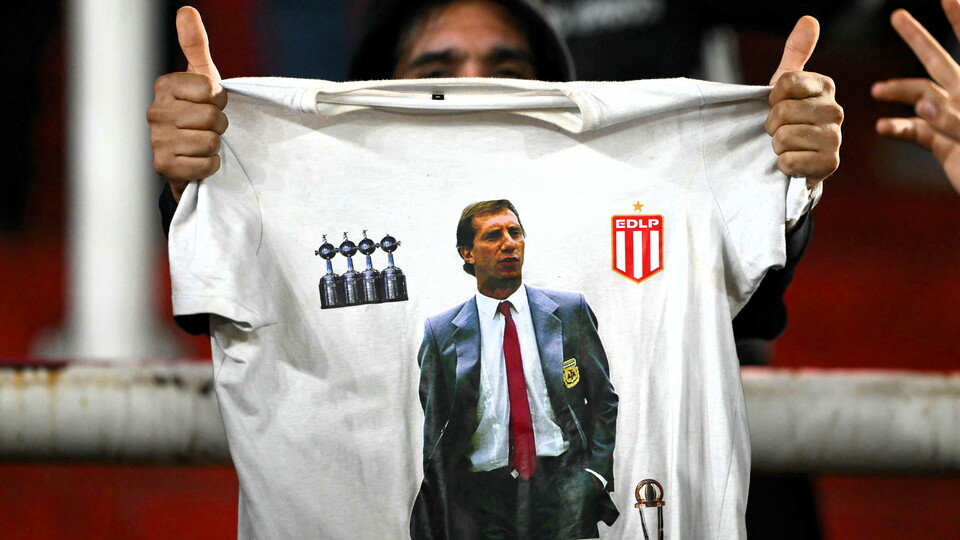
- A three-time CONMEBOL Libertadores winner as a player in 1968 (when Estudiantes faced Palmeiras in the final at the Centenario), 1969 and 1970, Bilardo expressed his desire to see the club achieve ‘Eternal Glory’ once again three years ago.
- Now honoured with a statue at Estadio UNO, he famously declared after Estudiantes' most recent continental triumph in 2009: “To talk, you have to win. Otherwise, you can't talk. And Estudiantes deliver.”
Carlos Salvador Bilardo played a match in the inaugural edition of the CONMEBOL Libertadores in 1960. He had won the Argentine First Division title in 1959 with San Lorenzo, the club where he began his playing career. Following a spell at Deportivo Español, Bilardo — a hard-working right-sided midfielder known for his tactical discipline, tireless running and reading of the game — joined Estudiantes de La Plata in 1965. At the club that now honours him with a statue beside the pitch at Estadio UNO, he won three CONMEBOL Libertadores titles, in 1968, 1969 and 1970 (as well as the 1967 Metropolitano, the 1968 Intercontinental Cup and the 1969 Interamerican Cup). In the first of those continental triumphs, Osvaldo Zubeldía's Estudiantes, with Bilardo as one of their leading figures, defeated Brazil's Palmeiras 2-0 in the decisive play-off match of the final at the Estadio Centenario in Montevideo.
Indeed, 58 years later, Estudiantes de La Plata will contest their sixth CONMEBOL Libertadores final against Palmeiras at the Centenario on 28 November. And, in a way, because his presence is always felt, Bilardo will be there alongside the team and the 'Pincharrata' supporters making the journey to Montevideo.
In 2023, after Estudiantes won the Copa Argentina, 'El Doctor' — who suffers from Hakim-Adams syndrome, a neurodegenerative condition diagnosed in 2017 — told his brother Jorge Bilardo, who looks after him on a daily basis, that he wanted to win the CONMEBOL Libertadores again. Jorge recounted the conversation to Madero Sports: “We watched the Copa Argentina final on television with Carlos. It was just the two of us and the nurse; he watched it calmly. We celebrated the goal, he was happy, but he told me that this title means nothing. He wants to win the Libertadores.” It was a quintessential Bilardo reaction, one that perfectly captures his character: always striving for more, always looking ahead, always determined to win again and again.
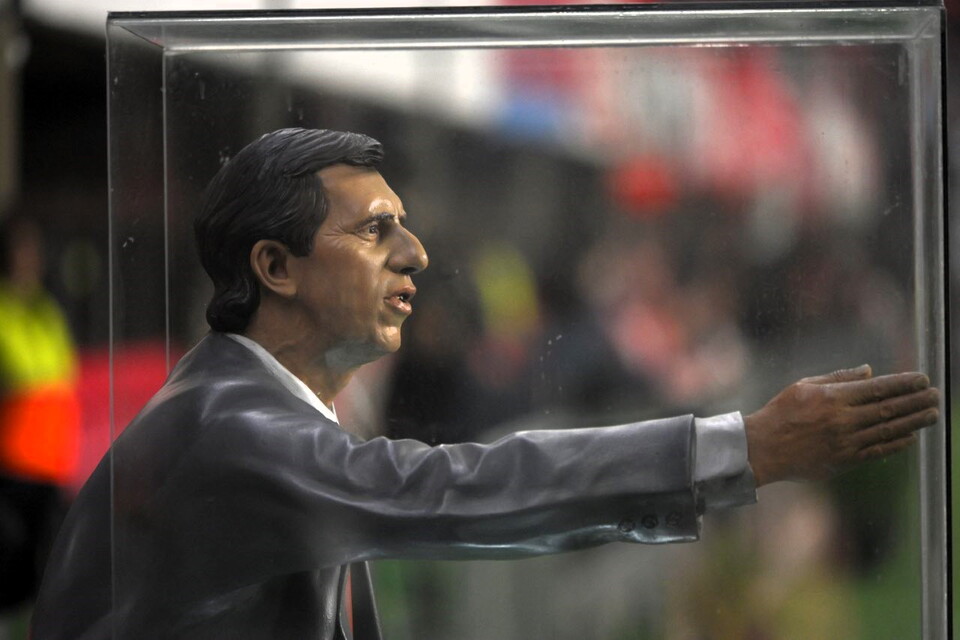
One particular scene illustrates Bilardo's stature: ahead of the first leg of the 2026 CONMEBOL Libertadores Semi-final at Estadio UNO, Uruguayan midfielder Giorgian De Arrascaeta, one of Flamengo's star players, approached Bilardo's statue during the team's pitch inspection and took a photograph of it with his phone. The statue, depicting Bilardo in a grey suit gesturing with his hand as if giving instructions, was unveiled by the club in 2019 beside the stand on Calle 115. “We wanted to pay tribute to someone who represented us so well, not only at Estudiantes but also with the national team. When we talk about family, it's about putting the group above everyone else. We've lost many important people, and he represents all those who are still with us and continue to support us,” said Estudiantes president Juan Sebastián Verón at the time. Juan Sebastián, who won the 2009 CONMEBOL Libertadores with 'El Pincha', is the son of Juan Ramón Verón, Bilardo's team-mate during the club's three consecutive triumphs in 1968, 1969 and 1970. The elder Verón, known as 'La Bruja', passed away in 2025.
Bilardo, who managed in just one edition of the CONMEBOL Libertadores, in 1978 with Deportivo Cali — the first Colombian club to reach the final, where they were ultimately defeated by Boca Juniors —, regarded Osvaldo Zubeldía as his mentor. Zubeldía remains the only coach to have won the competition three times (Portuguese manager Abel Ferreira will equal that record if Palmeiras defeat Estudiantes in the Final). After lifting the FIFA World Cup in Mexico in 1986, Bilardo confessed: “Right now, I'm not thinking about my family or anyone else: only Zubeldía.”
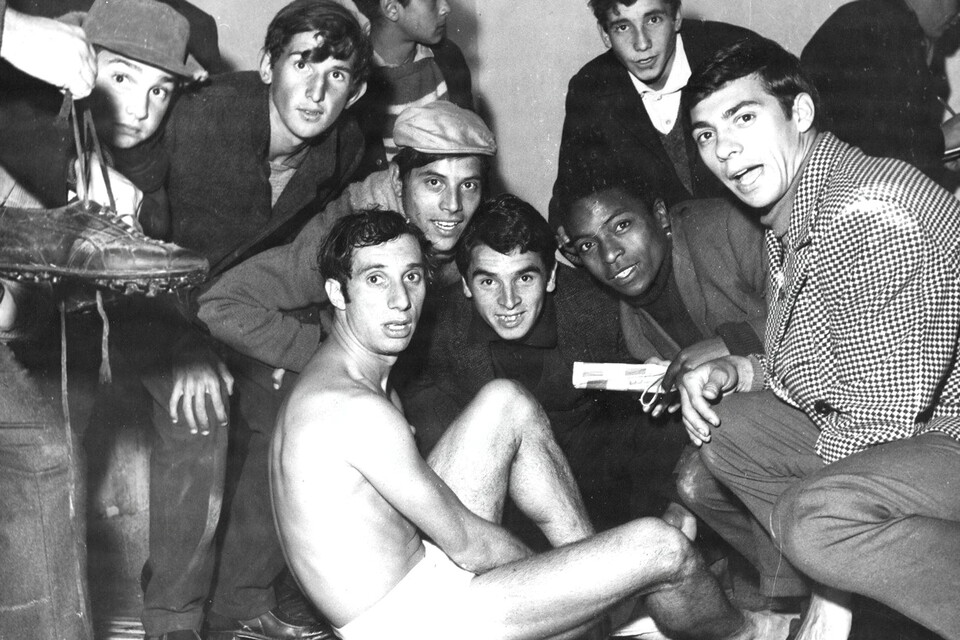
Bilardo — who, during his time as Deportivo Cali coach, motivated his players by telling them that strong performances would earn them a place on the cover of El Gráfico magazine — often recalled an anecdote from Estudiantes' first CONMEBOL Libertadores triumph in 1968. The magazine Goles wanted to feature a photograph of the team celebrating on its cover. However, with no photographs available, the publication arranged a photo shoot with a group of players on the Monday following their triumph, which had taken place on Thursday, 16 May, at the Centenario. “Shout, pretend you've scored a goal,” the photographer instructed them. “But it's Monday,” Bilardo replied. The cover of Goles featured Bilardo, Marcos Conigliaro, Carlos Pachamé, Raúl Madero and Oscar 'Cacho' Malbernat, the captain of the side that would go on to win three consecutive titles. All of them embracing and celebrating, recreating the joy of a goal.
On 16 March 2022, when Bilardo turned 84, Pachamé — another three-time CONMEBOL Libertadores winner with 'El Pincha' in 1968, 1969 and 1970, and Bilardo's assistant coach at the 1986 FIFA World Cup in Mexico — brought him a giant cake shaped like the 'Eternal Glory' trophy. Standing 58 centimetres tall, it was made with chocolate-chip sponge cake and featured a red-and-white base. “They won it three times. Made to scale. We made it with chocolate chips because we knew that was what his team-mate liked,” Ottidulces, the bakery responsible for creating the themed cake, wrote on Instagram. Bilardo remains an iconic figure among the most decorated players in CONMEBOL Libertadores history.
In 2009, after 'El Pincha' claimed their fourth CONMEBOL Libertadores title — with Alejandro Sabella as head coach and Verón as captain — by defeating Cruzeiro 2-1 in the second leg at the Mineirão (following a goalless draw in La Plata), Bilardo reflected on the significance of the triumph. Having previously studied the competition regulations, he had recommended bringing in Rolando Schiavi on loan to play in the Semi-finals and Final. “I've been saying this for a long time: the kids at Estudiantes de La Plata, the younger generations, had never seen Estudiantes crowned champions of South America. Their grandparents and parents would tell them what it was like; I've met young people aged 24 or 25... Now they're experiencing it themselves. It's something you never forget. To talk, you have to win. Otherwise, you can't talk. History is written by those who have achieved something. And that's why Estudiantes deliver. And for me, Estudiantes are the best team in South America.”
Those words could resonate once again on 28 November if Estudiantes emerge victorious against Palmeiras in the Final at the Centenario, just as they did on that historic first occasion.