- In the 2026 Group Stage, Universidad Católica (Chile), Universitario (Peru), Universidad Central (Venezuela), and Liga Deportiva Universitaria (Ecuador) will be present—the latter being the only 'university' club to have won the tournament, lifting the trophy in 2008.
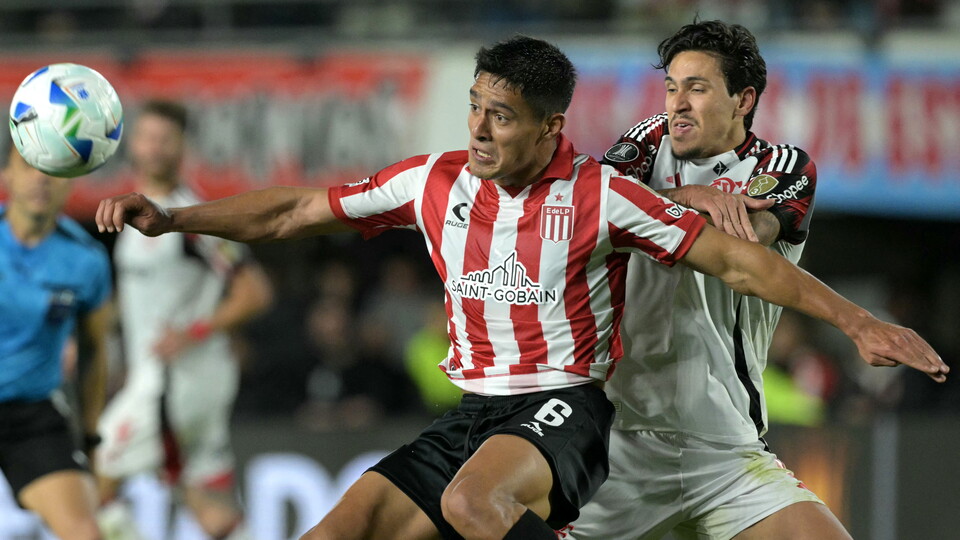
- Founded by secondary school and university students, Estudiantes de La Plata also forms part of this tradition. The Argentine club went on to become one of the most successful teams in the competition, winning the CONMEBOL Libertadores four times (1968, 1969, 1970, and 2009).
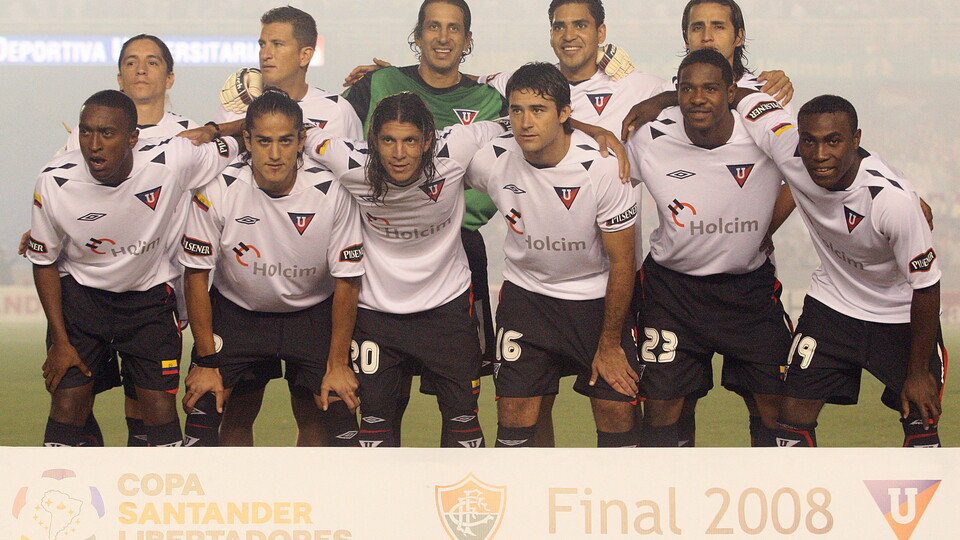
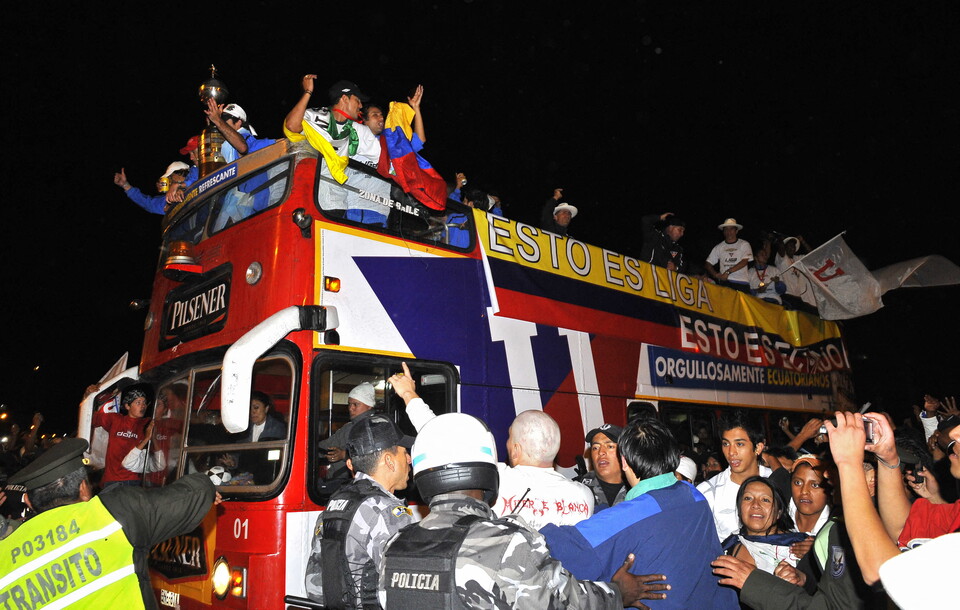
It can be said that, in the 65-year history of the CONMEBOL Libertadores, only one club with a university-rooted identity in its name has tasted 'Eternal Glory': Liga Deportiva Universitaria de Quito. The Ecuadorian side—also the first and only club from its country to win the tournament—defeated Brazil’s Fluminense in the 2008 final under the management of Edgardo “Patón” Bauza.
The origins of Liga de Quito date back to 1918, when a group of students from the Faculty of Medicine at the Central University of Ecuador founded Club Universitario. It remains the only 'university' club to have won the Libertadores, although Estudiantes de La Plata—champions in 1968, 1969, 1970, and 2009—was also founded by secondary school and university students in 1905. However, its name was chosen to represent the students themselves rather than any specific academic institution—another form of identity-building.
In the 2026 edition of the CONMEBOL Libertadores, Liga de Quito will be joined by three other 'university' clubs: Club Universitario de Deportes (Peru), Club Deportivo Universidad Católica (Chile), and, as its name clearly reflects, Universidad Central de Venezuela Fútbol Club.
Peru’s Universitario, founded in 1924 as Federación Universitaria de Fútbol by students from the National University of San Marcos in Lima, reached the CONMEBOL Libertadores final in 1972, where it was defeated by Independiente of Argentina. That campaign remains the club’s best-ever performance in the tournament—and, to this day, one of the most significant in Peruvian football history.
Figures such as Héctor Chumpitaz, Luis Cruzado, and Oswaldo 'Cachito' Ramírez—key members of the Peru national team that reached the quarterfinals of the 1970 World Cup—were part of that historic run and played in the final against Independiente, marking a golden generation that brought Universitario to the brink of continental glory.
Chile’s Universidad Católica is the other 'university' club to have reached a CONMEBOL Libertadores final. It happened in 1993, when they were defeated by São Paulo, coached by Telê Santana (a 5–1 loss in Brazil and a 2–0 win in Chile). The club was founded within the Pontificia Universidad Católica de Chile in 1937 by university athletes who broke away from Club Universitario de Deportes to represent their institution, created under the auspices of the Catholic Church and the Archdiocese of Santiago.
The 1993 Universidad Católica side remains, to this day, the last Chilean team to play in a CONMEBOL Libertadores final. Under the management of Ignacio Prieto, the squad featured standout performers such as Argentines Juan Carlos Almada—top scorer of the tournament with nine goals—Ricardo Lunari, and Sergio Vázquez, who would later play in the 1994 FIFA World Cup. Among the Chilean players, Nelson Parraguez, Rodrigo Barrera, and Mario Lepe—the team’s captain and a true club icon—also played key roles.
Among the 'university' clubs making their way into the CONMEBOL Libertadores, Universidad Central de Venezuela Fútbol Club stands out as one of the newest participants, set to play its second edition in 2026. The club’s name reflects its direct connection with the Universidad Central de Venezuela (UCV), the country’s oldest higher education institution. Founded in 1950 by a group of students, the team has deep academic roots and a long-standing tradition in Venezuelan football.
After being eliminated in the second qualifying round by Corinthians in 2025, Universidad Central secured a direct place in the Group Stage this time around following a historic domestic campaign. Under coach Daniel Sasso, the team achieved an unprecedented treble—winning the Torneo Apertura, Copa Venezuela, and the national championship—which granted them qualification for the 2026 Libertadores group stage.
Despite losing a key figure such as goalkeeper Miguel Silva, the hero of the Apertura final after saving a decisive penalty, the squad still retains several important pieces. Among them are forward Jovanny Bolívar, one of the standout young attackers in Venezuelan football; playmaker Samuel Sosa; and Colombian players Juan Camilo Zapata and Juan Manuel Cuesta, all of whom provide quality and attacking threat as the club prepares for its continental challenge.
Within this brief history of 'university' clubs in the CONMEBOL Libertadores, others have also taken part over the years, including Universitario de Sucre (Bolivia), Universidad de Chile and Universidad de Concepción (Chile), Universidad Católica (Ecuador), Universidad San Martín de Porres and Universidad César Vallejo (Peru), as well as Mexico’s Pumas UNAM and Tigres UANL—finalists in 2015. The CONMEBOL Libertadores, indeed, continues to attract institutions born from academic roots—and awaits the next club capable of delivering a champion’s thesis.