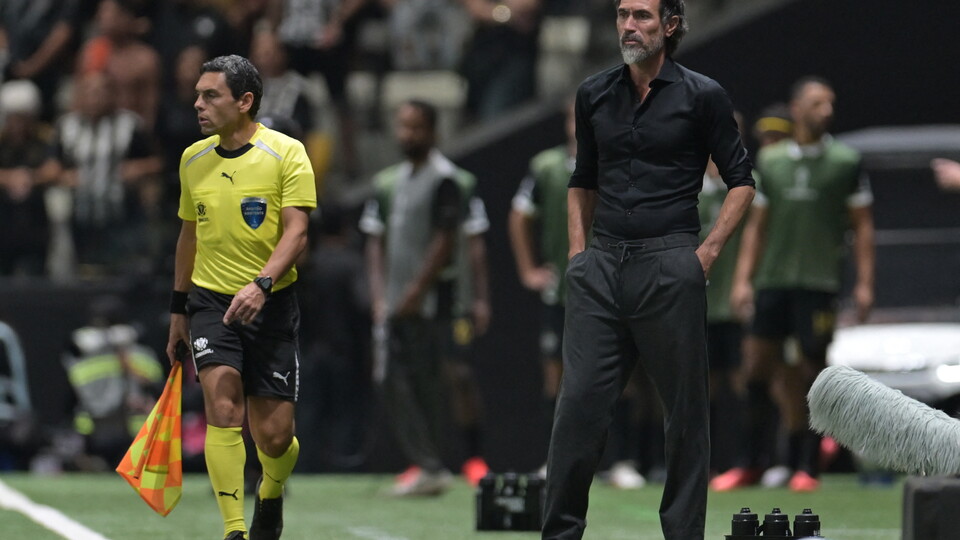
- Married to Brenda Bianchi, daughter of the former coach who won multiple titles with Boca and Vélez, the Atlético Mineiro manager has built his career around one simple rule: believing in his own way of doing things.
- A champion with Uruguay’s Nacional, Colón and Estudiantes, Domínguez joined Atlético Mineiro in February and has already guided the club into the CONMEBOL Sudamericana Semi-finals.
Eduardo Domínguez tends to end his answers about Carlos Bianchi with the same line: “I always come back to what my father-in-law told me: ‘Be yourself.’” He shared it in 2022, while still in charge of Colón, and it explains better than anything else the relationship between the Atlético Mineiro manager and the most successful coach in CONMEBOL Libertadores history.
Domínguez has been married to Brenda Bianchi, the daughter of “El Virrey”, since 2008. He has in his close circle the man who won four editions of South America’s most prestigious club competition, but he has always been careful not to become a copy of him.
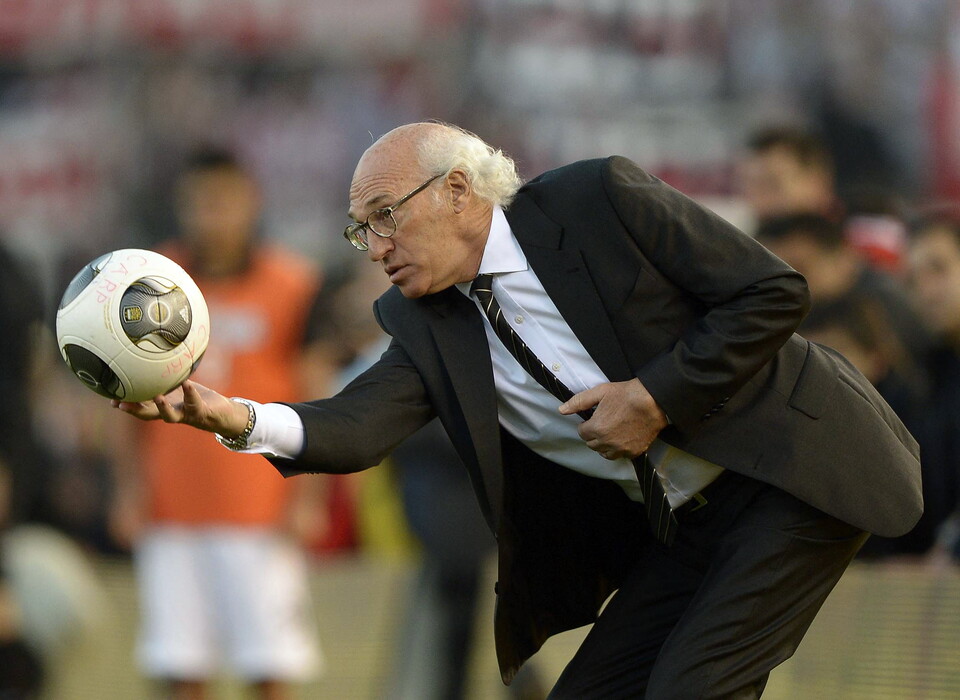
The story between the two began away from football. “The father of one of my best friends was a friend of Carlos Bianchi. I had known her since I was 12 or 13. We each went our separate ways after that, although our paths crossed again later on,” he recalled in a 2025 interview.
When Domínguez retired from playing in August 2015, at the age of 37, to take over as coach of Huracán — the club where he had played as a centre-back and won the Copa Argentina — Bianchi gave him a piece of advice that he has repeated ever since: “I’m not going to give you advice, just tell you what happened to me. I don’t know what’s going through your head; you have to be yourself.”
Bianchi himself is careful when it comes to the subject. “I only talk about football when necessary. I don’t want to overstep by becoming an adviser,” he said last year during a public talk. And when he travelled to Montevideo in February 2019 to watch his son-in-law’s official debut in charge of Nacional, in the Uruguayan Super Cup against Peñarol, he summed it up in one line: “I’m here to watch a football match.”
Nacional won on penalties. It was Domínguez’s first title as a coach. “Winning a trophy is not something that happens every day, especially when you have just arrived and your first official match is against your lifelong rivals,” he said that night.
What followed laid the foundations for a career with an identity of its own. As a player, Domínguez came through the ranks at Vélez, where he made his debut under Marcelo Bielsa and won the 1998 Clausura, before going on to play for Olimpo, Racing, Independiente, Independiente Medellín, Los Angeles Galaxy, All Boys, Atlético Rafaela and Huracán.
As a coach, his breakthrough in Argentine football came in Santa Fe. On 4 June 2021, in San Juan, Colón beat Racing 3-0 to win the Copa de la Liga, the first top-flight title in the club’s history.
After a six-month spell at Independiente, he took charge of Estudiantes in March 2023 and built one of the most successful periods in the Pincha’s recent history: the 2023 Copa Argentina, the 2024 Copa de la Liga, the 2024 Trofeo de Campeones, the 2025 Torneo Clausura and the 2025 Trofeo de Campeones. Five titles in less than three years, across 164 matches in charge.
The style of play Domínguez implements with his teams bears his own imprint, although it does reflect one distinctly Bianchi-like principle: attitude above system. His sides do not rely on possession — his title-winning Colón team averaged 45 per cent — but on defensive solidity and quick transitions. He explained it during his presentation in Belo Horizonte on 27 February, with the candour of someone well aware of the label often attached to his teams: “There is a view that my teams are more defensive than attacking. But they also score a lot of goals. A good defence is a good attack; if we attack well, we have to defend less.”
Atlético Mineiro announced his appointment on 24 February 2026, on a contract running until December 2027, as Jorge Sampaoli’s replacement. Domínguez left Estudiantes after receiving an offer the La Plata club described as impossible to turn down and took charge of a Galo side that had lost the 2025 CONMEBOL Sudamericana Final to Lanús on penalties.
He lost his first final, the Campeonato Mineiro decider against Cruzeiro, before putting together a 100-day unbeaten run that carried his side into the CONMEBOL Sudamericana Semi-finals. At Arena MRV, his record is the best of any coach in the stadium’s history: 12 wins, four draws and just one defeat in 17 matches.
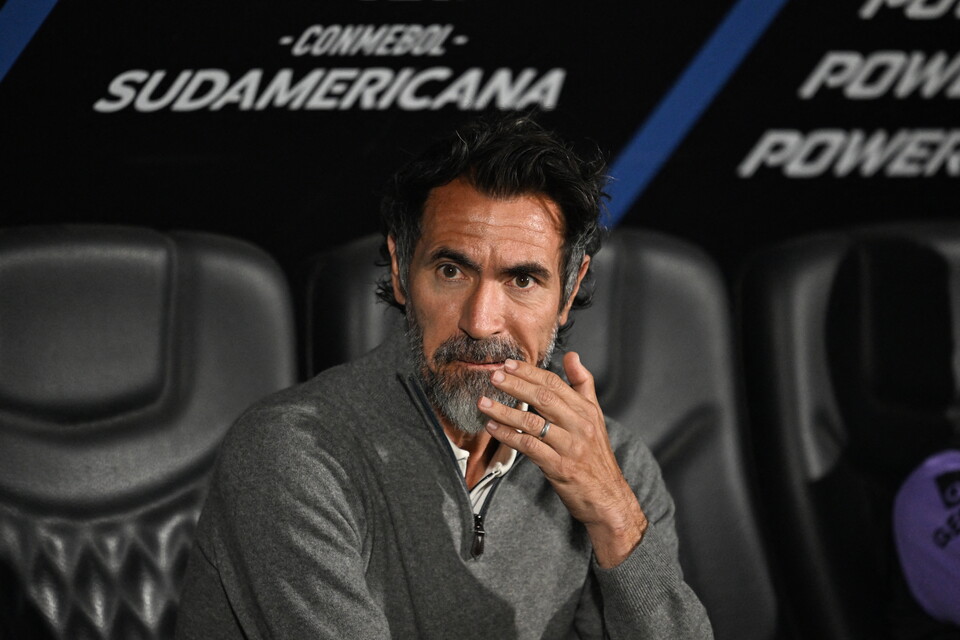
The continental competition tested him like no other. Atlético Mineiro won Group B over the final two matchdays, edged past Red Bull Bragantino thanks to a stoppage-time goal from Tomás Cuello and, against Santos, overturned a 2-0 deficit with a 4-2 win in Belo Horizonte before advancing on penalties, with Gabriel Delfim — the back-up goalkeeper whom Domínguez had confirmed as the starter following Everson’s injury — saving three spot-kicks.
“It is Atlético who are through to the Semi-finals, not Delfim,” he said that night, true to his habit of sharing the credit. “We knew what kind of game we had played there and that it could not happen again. We had to show a different side of ourselves, and the players did that,” he added, in a pointed reminder to his squad.
The Semi-finals will pit Galo against Montevideo City Torque, on 14 October at Arena MRV and on 21 October at the Estadio Centenario. Should his side prevail, Domínguez will have the chance to settle some unfinished business: in 2015, when he was taking his first steps as a coach, his Huracán side — whose professional squad he had still been part of as a player only months earlier — lost the Final to Independiente Santa Fe. Bianchi, who won everything there was to win on the continent, told him the lesson eleven years ago, and Domínguez has repeated it ever since whenever he is asked: the path has to be his own.