- José ‘El Principito’ Sosa, the most decorated player in Estudiantes history and a member of the squad that will face Palmeiras in the final at the Centenario, often quotes Osvaldo Zubeldía as if to summon the coach’s presence.
- Zubeldía coached Estudiantes to the title in 1968, 1969 and 1970. To this day, the fans sing: “There’s something I want to tell the players / here you have to give your all / here at Estudiantes you have to put in the work / just as Zubeldía taught us / let’s push forward, let’s go out and win.”
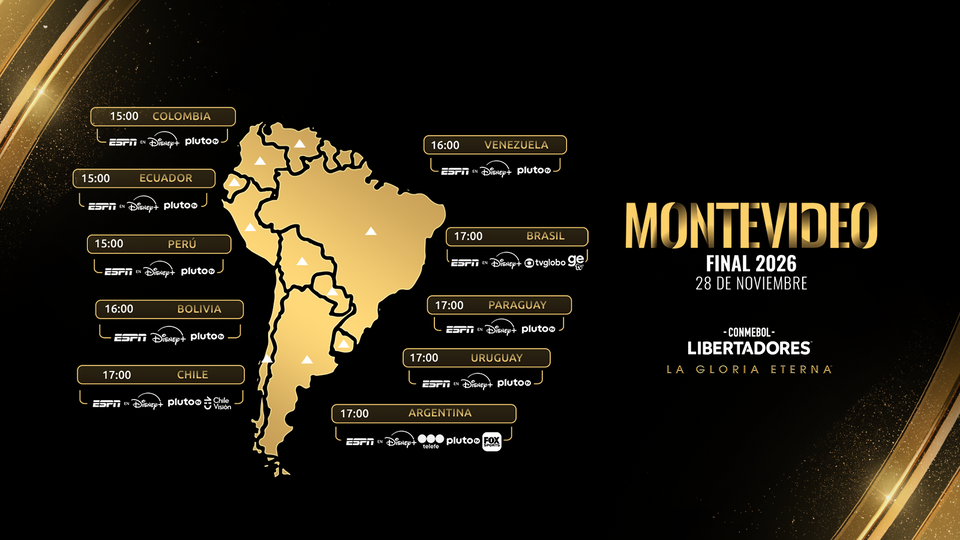
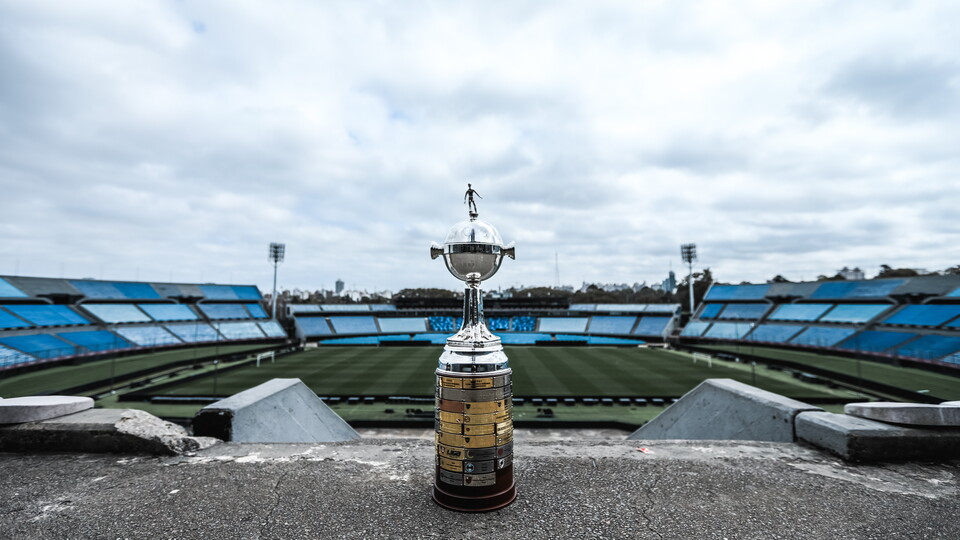
José ‘El Principito’ Sosa is the most decorated player in the history of Estudiantes de La Plata, with seven titles to his name, and he is still part of the squad. In October, in the middle of a busy run of fixtures, he recalled the words of Osvaldo Zubeldía: “We need to remind ourselves of that: ‘The next match is the most important one’.” Next Saturday, that next match for Estudiantes is the CONMEBOL Libertadores final against Palmeiras at the Estadio Centenario in Uruguay. Sosa had also quoted Zubeldía in December 2025, when victory in Argentina’s Trofeo de Campeones made him the most decorated player in the history of the club known as ‘El Pincha’. “As Osvaldo Zubeldía said, let the fans celebrate, because we had to keep building to keep winning. This is the history of Estudiantes.”
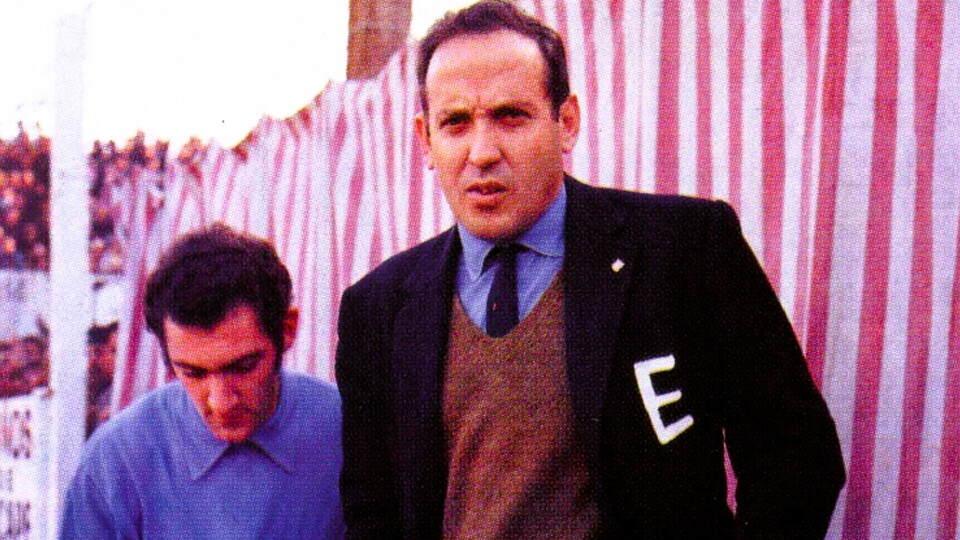
Zubeldía, who coached Estudiantes to three straight CONMEBOL Libertadores titles in 1968, 1969 and 1970, is an iconic figure at the La Plata club. He came to personify a revolution. Under his leadership, Estudiantes won the 1967 Metropolitano, breaking the grip of Argentina’s so-called ‘big five’ and qualifying for the CONMEBOL Libertadores for the first time. The team they went on to beat in that final was Palmeiras. In 2025, as Estudiantes celebrated their 120th anniversary, members of the 1968 Intercontinental Cup-winning side unveiled a statue of Zubeldía on the Paseo de los Profesores at the Estadio UNO. Carlos Bilardo was the first to be honoured with a statue. The next will be Alejandro Sabella, who guided ‘El Pincha’ to their most recent CONMEBOL Libertadores title in 2009.
Zubeldía, known as ‘El Zorro’ (‘The Fox’), was a public library, open to anyone who wanted to explore the finer points of the game. His sayings, ideas and practical advice still hold true in the 21st century because, after all, football is still played the same way, with a ball on a pitch. “The road to glory is not strewn with roses,” he wrote in chalk on a board in the away dressing room at Old Trafford before Estudiantes drew 1–1 with Manchester United to lift the 1968 Intercontinental Cup. They had won the first leg 1–0 in La Plata. “Winning is the only truth. ‘It’s the taking part that counts’ is a line losers came up with for fools. There was no mystery to that Estudiantes side, no laboratory, despite what people so often claimed. When two teams are evenly matched, the one that works harder and is better organised wins. The only secret is to work hard, bring the players together as a unit and get it into your heads that you have to cover the whole pitch,” he said.
Zubeldía was ahead of his time in two areas of the game that would eventually become standard practice. One was pushing the defensive line up to catch opponents offside. The other was working on set pieces. “Ignoring the importance of set pieces is like trying to drive a car on three wheels,” he said. In the 1–0 win in La Plata, Manchester United were caught offside 13 times, compared with just twice for Estudiantes. “I believe in the offside trap because it crushes the opposition’s morale. A forward who gets caught offside five times ends up afraid to go into the box. I accept that some people don’t like the way Estudiantes play. I recognise that when we use the offside trap, we play a destructive game that stifles opponents and wears them down. But we don’t do it purely to defend. Quite the opposite. Against sides that can play or are dangerous from crosses, we avoid getting pinned back. We push up as a unit for two reasons: to catch them offside and to win the ball back far from our own goal.” Those words could just as easily have been spoken today.
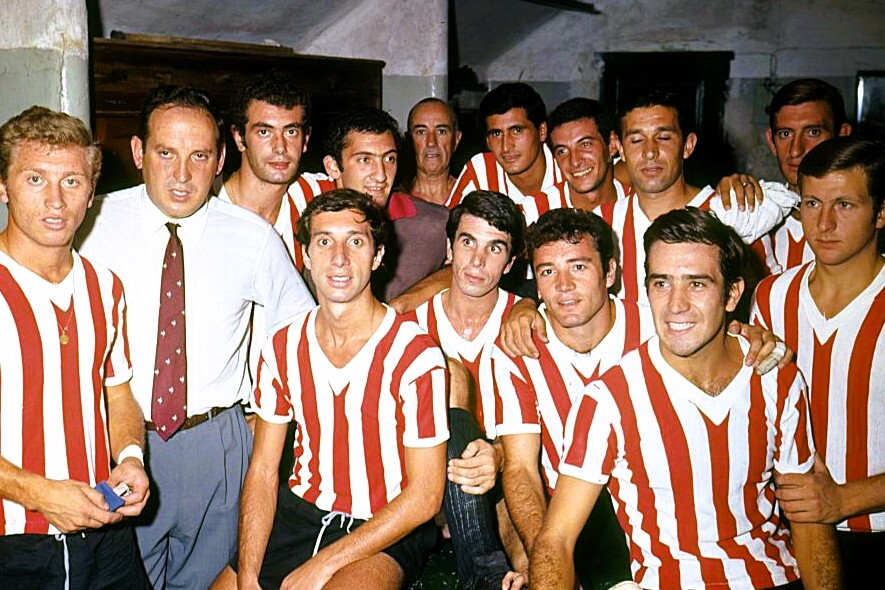
Zubeldía also won the 1969 Copa Interamericana with ‘El Pincha’, the 1974 Campeonato Nacional with San Lorenzo and the Colombian league title in 1976 and 1981 with Atlético Nacional of Medellín. At a time when few coaches did so, he held twice-daily training sessions, rehearsed near-post corners, brought his players together for pre-match stays and taught them to cope with stage fright. He also used slide presentations, a forerunner of the video analysis now commonplace at clubs around the world. “Every club should do this, but at youth level. By the time players turn professional and reach the first team, they should all know the laws of the game.” He always stressed the qualities he considered essential: character, tactical intelligence and a winning mentality.
Zubeldía, who co-wrote the 1965 coaching manual Táctica y estrategia del fútbol with Argentino Geronazzo, said it was Bernardo Gandulla, Adolfo Mogilevsky and Pablo Amándola who taught him the value of training with the ball and rehearsing set plays. He learnt about the offside trap by watching Czech football in person. Rinus Michels, the former Ajax and Barcelona coach who also led the Netherlands side known as ‘Clockwork Orange’, was once asked where ‘Total Football’ had come from. “Zubeldía invented it at Estudiantes de La Plata.” In Michels’ telling, the Estudiantes side that won three successive CONMEBOL Libertadores titles helped shape the way his Dutch team played.
Moments after coaching Estudiantes to the 1982 Metropolitano title, Carlos Bilardo’s thoughts turned to Zubeldía. They did so again at the 1986 World Cup in Mexico. On that first occasion, he broke down. Still on the pitch after the 2–0 win over Talleres in Córdoba, he could barely speak. Through his tears, he managed just one word: “Zubeldía…” Bilardo, a midfielder in the Estudiantes side that won the CONMEBOL Libertadores in 1968, 1969 and 1970, once recalled: “He taught me a lot. We’d go and watch a match, for instance, and people would say, ‘Look at them, studying the opposition.’ Zubeldía sent me to watch matches twice, once to Milan and once to England. I remember we used to pay a man to record the games, and I’d go and collect the recording after the match. How he did it, I don’t know, but he did. We were interested in the opposition too.”
Born on 24 June 1927 in Junín, in the province of Buenos Aires, Osvaldo Juan Zubeldía Chidichino played in midfield for Vélez, Boca, Atlanta and Banfield without making much of a name for himself. As a coach, his ideas put him ahead of his time. A man of humble origins with a strong social conscience, he died in Medellín on 17 January 1982. Three days later, Estudiantes bid farewell to a club legend at their headquarters on Calle 53. Among those present was Bilardo, who had just taken charge of ‘El Pincha’.
When critics accused his side of rough play, Zubeldía replied: “What happens is that Estudiantes mark their opponents, so there’s more contact and it’s easier to see. Now, every day we hear people say we ought to play European teams to get used to their tight marking. But when Estudiantes mark tightly, everyone gets upset. Who can figure them out?” The fans still sing his name today, and they will sing it again at the Centenario in the final against Palmeiras: “There’s something I want to tell the players / here you have to give your all / here at Estudiantes you have to put in the work / just as Zubeldía taught us / let’s push forward, let’s go out and win / and let’s kill for these colours / to take that lap of honour / to lift / our fifth Copa Libertadores / oh, come on, León, come on, León, come on, León / oh, come on, León, come on, León, come on, León.”