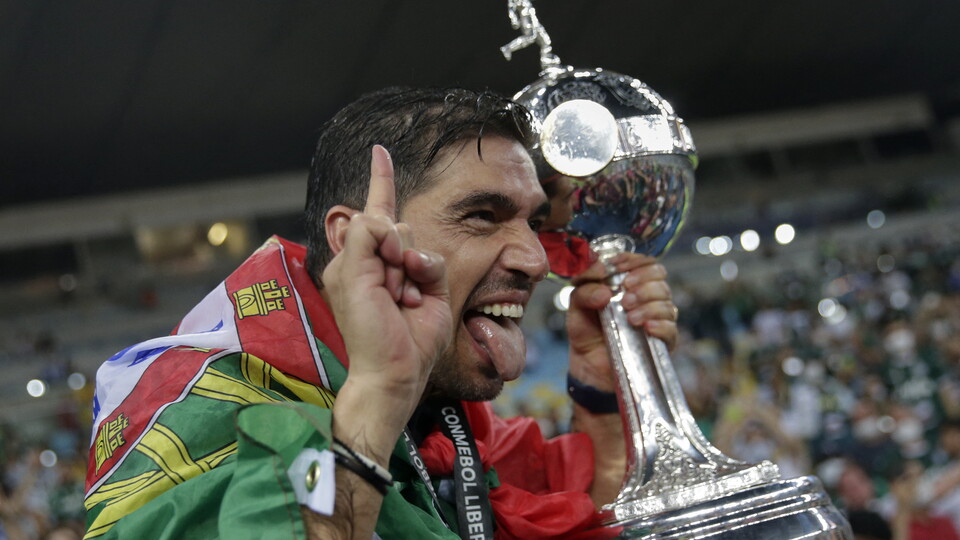
- The Portuguese coach spoke to CONMEBOL about what he learned from winning the Libertadores twice. “The journey ends up being more important.”
- Ferreira praised Estudiantes’ mental strength and explained how Gustavo Gómez, the only player who has been with him for all four finals, earned his trust.
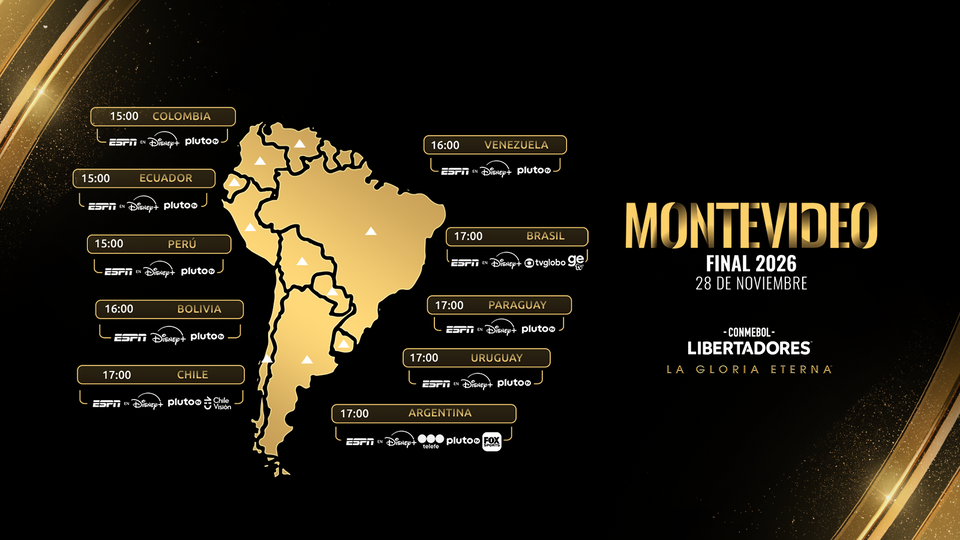
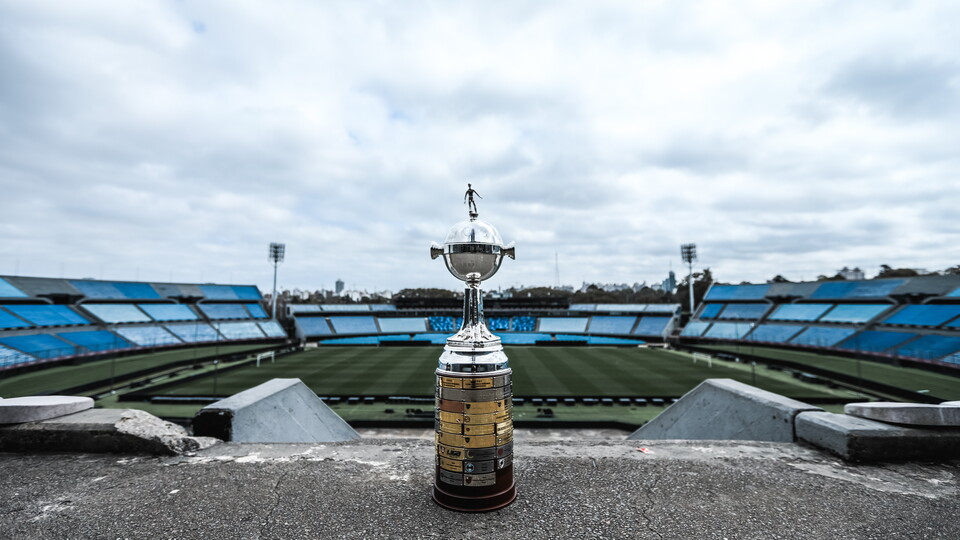
When Abel Ferreira thinks back to the 2021 final at the Estadio Centenario, he pictures himself running to his wife at the final whistle. Five years later, the Palmeiras coach returns to Montevideo to face Estudiantes de La Plata in the 2026 CONMEBOL Libertadores final. This time, he has made himself a promise, one he has shared with his players. He wants to savour the days that went by all too quickly when he won his first two titles.
CONMEBOL: We’re all heading back to Montevideo, a city that has come to mean a great deal to Palmeiras, to the fans and to you personally. Five years ago, you won the title at the very ground where this year’s final will be played. What does it mean to go back to Montevideo? Beyond the title itself, what moments come to mind when you think of the city?
Ferreira: More than anything, I remember seeing how happy the Palmeiras family was. Seeing everyone at the club so happy: the staff, the coaching team, our fans. Emotions run so high during the game because a final means so much. You feel it as a player, you feel it when you’re watching and, above all, you feel it when you’re cheering on the club you love. In my case, that’s Palmeiras.
The first image that comes to mind, and I have to mention it, is of me running to my wife at the final whistle. She was there. But when I think about everyone who was part of it, what stays with me is that shared joy. That’s what we work for. The joy on the faces of our fans, our coaching staff, our players. That’s the first picture that comes to mind. Just sheer happiness.
CONMEBOL: You’ve told us several times that you wish you’d enjoyed those titles more, both the one you won at the Maracanã and the one you won in Montevideo. Do you think you’ll be able to enjoy this final more?
Ferreira: I don’t know, but as difficult as it’s been to get here, I think I’ve allowed myself to experience this run the way I deserve to as a coach. I’ve had to live up to people’s expectations, particularly our fans’ expectations, and shoulder the responsibility that comes with my job. I’ve approached it with the same seriousness, the same professionalism, the same preparation and the same dedication, but I’ve also enjoyed it. I’ve enjoyed the moments as they’ve come, because I think that’s how it should be.
It wasn’t quite like that when I won my first Libertadores, or my second. But I’ve been saying this to you since the start of this season, after all those titles. I think it was after that first Libertadores that it struck me. Looking back over my career, I’d honestly thought that once I won a… I’d already won some important titles as a player. I’d won a national title coaching the under-19s and a Lisbon Cup with the under-20s. But I thought that if I won something like the Libertadores or the Champions League, I’d be happy for the rest of my life. The truth is, you win the Libertadores and a week or two later you begin to realise that’s not how it works.
The journey ends up being more important. Enjoying it, being present, being in the here and now, living every moment to the full. I say you have to enjoy it because when you reach the summit, the view is wonderful, but you have so little time to take it in. The next thing you know, you have to climb the whole mountain again. That’s one of the biggest lessons I’ve learned from the titles I’ve won.
I thought the more titles I won, the more I’d enjoy it, and the exact opposite happened. Twice the demands, twice the responsibility, twice the dedication. Everything doubles. Twice the pressure.
I think there comes a point when you stop and ask yourself, “How do I want to experience these moments? Don’t I deserve to experience this final the way our fans do and go into it with a positive outlook?” If we’re here, we must have done something right to reach this final.
That’s why I told you and my players that I was going to learn to enjoy it. That’s what I did when we won our first title of the season, the Paulistão. I wanted to enjoy the journey, the people I was sharing it with and the moment itself, and still give my best. I think it’s only fair to let yourself experience it that way. The responsibility that comes with the job often makes you forget that part of it. Of course you have to take it seriously, but you should also feel the joy of it and take pleasure in what you do, without putting yourself under pressure to fulfil an obligation that doesn’t exist. Your only obligation is to give your best. That’s why I’ve spoken so often about enjoying the journey and enjoying the final. That’s what we’ve done all this for. And of course we’ll play to win, because that’s what we want.
CONMEBOL: It’s been a close-run thing for Palmeiras at almost every stage this year. You had a tough group stage, two difficult games against Cerro Porteño in the round of 16, and then you needed penalty shootouts against Liga de Quito and Fluminense to reach the final. You’ve spoken about trying to enjoy the journey. Is there a fine line between enjoying it and suffering through it?
Ferreira: No, because once you start to learn… I’m speaking from experience here, from the six years I’ve been at the club and everything we’ve been through in the Libertadores over that time. Palmeiras seem to have made all this look routine. You look at some of the biggest clubs in Brazil. Some don’t even play in the competition. Others don’t get this far. And yet sometimes we think it’s easy.
In my time at the club, Palmeiras have got used to going a long way in this competition. In seven years, we’ve reached four finals, made two semi-finals and gone out once in the round of 16. People can make what they like of that record, but it’s very difficult to achieve. Just look at what it took for us to get through this year. In previous editions, we finished the group stage with the best record of any team. We scored the most goals and picked up the most points. That’s hard to do.
Of course, when you set the bar that high, people expect you to do even better each time. But there’s a team on the other side of the pitch. Our opponents see Palmeiras differently now. As the club has grown, the way teams play against us has changed. They’ve come up with different strategies because of what we’ve done over the last few years.
I remember it well. Fifteen years ago, it was Boca and River, Boca and River. For at least two or three years running, it was Boca and River, Boca and River, Boca and River. Things have changed a little in recent years, partly because Brazilian clubs have grown and there’s been investment in Brazilian football. We started to compete. You saw it this year. Right from the start, everyone expected Palmeiras to reach the final, and it was incredibly hard to get here. People expected Flamengo to reach the final too, and they went out. That shows you how difficult it is.
Then there were those two shootouts you mentioned. Against Liga de Quito, for instance, we had the game completely under control and let the result slip through our fingers in the final minutes. That’s football. One thing I’ve learned from working in Brazilian football and playing in South American competitions is that the result can take on a life of its own. The game is often unpredictable. And one thing you feel much more intensely here is the emotion.
Emotion plays a huge part in matches here. Once you understand that, the question is how the players manage their own emotions, because what happens off the pitch can really affect the people on it. That’s why I keep telling my players that what we do on the pitch should set the tone for what happens around us. We can’t let ourselves get swept up in the emotion of everything going on outside.
Of course, it’s wonderful to feel the fans’ support and affection. But in these decisive moments, a team like ours has to keep its composure and understand what’s at stake. We also have to recognise that you can’t prepare for a final like this in the three days before the game, which is all Palmeiras will have. Three days to prepare for a final. That shouldn’t happen, but that’s the situation we’re in, and it’s something that deserves some thought.
In Europe, that would be unthinkable. So we’re not going to leave our preparations until those last three days. We have to prepare throughout the month leading up to the final, using the games we have to play along the way. We have to do it that way because nobody can prepare for a final in three days. In the Champions League, once the domestic league season ends, you have a week to prepare for the final. We need to remember what got us here and understand why it worked. That’s what will give us the tools and the know-how we need for the final.
CONMEBOL: We know you’ll study your opponents in more detail as the game draws closer, but what can you tell us about Estudiantes? What do you know about them already? What have you seen?
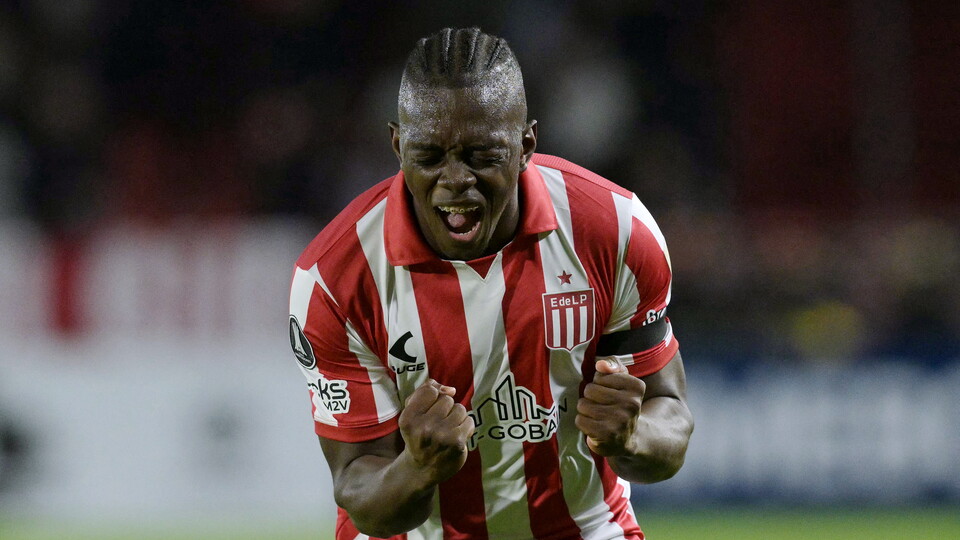
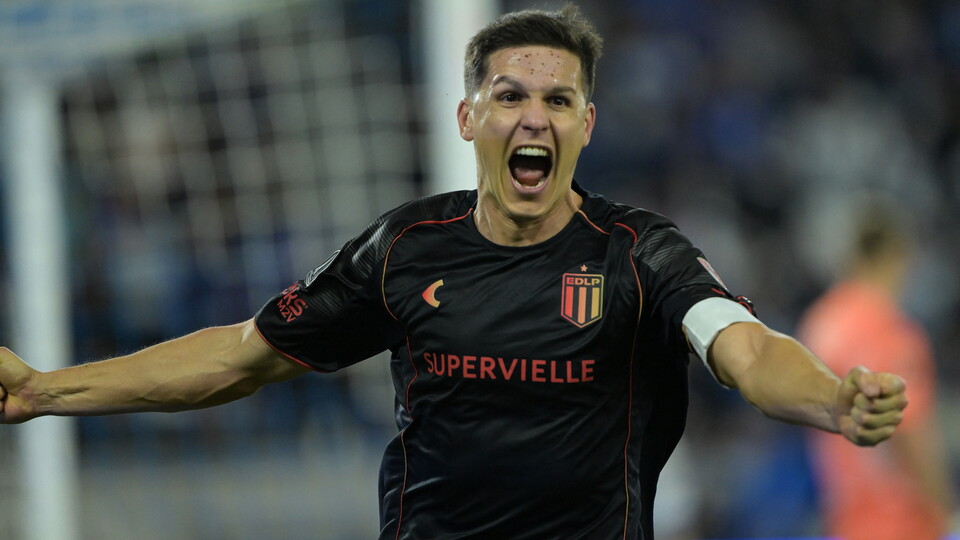
Ferreira: I think they’re a very competitive side with a lot of experience. They have several players who’ve been around a long time, and that helps in knockout ties like these. Just look at how they managed to take the tie to penalties and win it, even after going down to ten men. That shows real mental strength too.
As I said, we’ll use the international break to take an even closer look at them. But broadly speaking, they’re an Argentinian side. I don’t need to explain what competing means to Argentinian teams. They’re a very capable side with experienced players, and the club has a real history. So it has all the makings of a tough, competitive final against a team who, like Palmeiras, have earned their place here.
CONMEBOL: You recently marked six years at Palmeiras. It’s been six years since the club announced your appointment. You probably saw that Palmeiras had a bit of fun on social media looking back at what the world was like when they unveiled Abel Ferreira. A lot has happened in those six years. What was your world like before Palmeiras?
Ferreira: I was waiting for an opportunity. It’s the same in any profession. You prepare, you work hard at what you do and you wait for someone, whether it’s a person, a company or a club, to give you that chance. I was ready. I just needed the opportunity to show what I could do.
And it couldn’t be just any team. There’s no secret to it. If you want to win, you have to join a team with a history and a track record of winning. With all due respect, you could put Guardiola in charge of Nacional here and, however good he is, he’d still need the resources. You could put Kimi Antonelli or Max Verstappen in a Haas and, with all due respect, you’re not going to win. To win, you have to go to Ferrari, Mercedes or Red Bull. You have to join one of the big teams. There’s no other way.
As I said, few people know my story, either as a player or as a coach. Everything I’ve achieved in both roles has come through hard work, dedication, persistence, perseverance and the ability to pick myself up when I’ve had to. I think those are the moments that decide everything. When it all looks bleak and every door seems to have closed, you have to keep believing it’s possible.
Before I came here six years ago, I was working towards an opportunity like this. And for those two reasons, that opportunity came at Palmeiras. We had three interviews. Palmeiras interviewed me and I interviewed Palmeiras. I think coaches who know what they want have to go into those interviews with questions of their own. What does the club want? What’s its philosophy? Sometimes you speak to club presidents who say one thing in the interview and then do another. Fortunately, everything here was just as they’d described it. What they offered me was what I found. The club’s philosophy matched my own.
And honestly, when I look at the club’s values, the way it works and the way it’s organised, I think what we did when I arrived was put together the pieces of a puzzle that was already there. We put our own stamp on it, brought the experience we’d gained in Europe and helped a club that was already a giant keep growing.
CONMEBOL: If you could go back over those six years, is there anything you’d change?
Ferreira: No. I’m not one to look back and say, “I’d change this or that.” That’s never really been me. I’ve learned as I’ve gone along and tried to take the good and the bad in the same spirit. Unfortunately, whether people like it or not, perhaps I learn more from mistakes. Maybe mistakes are what help us grow the most. It’s the hardest moments that make us reflect, question ourselves, evolve and change for the better. We don’t want to forget those moments. They’re part of the process too. But no, honestly, I wouldn’t change a thing.
So many good things have happened. We’ve had moments of immense joy and a few [word unclear]. Very few, but I can’t say there weren’t any, because they’re part of it too. Overwhelmingly, though, we’ve shared the joy and celebrated together. It would be arrogant of me to say I expected us to be this consistent, win this much and be in contention as often as we have over six years in a league as competitive as Brazil’s, at a club like Palmeiras. That takes the work of so many people at the club.
That’s what I mean by “Todos Somos Um” [We Are All One]. It was one of our guiding principles from the moment I arrived. It’s why I spoke about the puzzle, about fitting the pieces together and getting them to work like the parts of a clock. Each one has a part to play in keeping time. That’s how we can give our fans something to celebrate and share in that joy ourselves. The fans are the soul of the club, of course, but we give up a great deal too. We go through a lot and we pay a price for those moments.
Our players have to understand what those sacrifices involve, how high the standards are, what we ask of one another and what we demand of one another. And you know that when you work in a team where the standards are that high, hugs and kisses will only get you so far. Sometimes someone has to tell you something you don’t want to hear. You have to tell people what they need to keep doing, show them what’s working and what needs to change. And that often takes its toll.
Fortunately, I think Leila, who leads the club, Barros and I, as coach, have the judgement to know when to add salt, when to add pepper and when it needs a little more sugar. It’s like following a recipe. Everyone knows how to make a cornmeal cake, but knowing when to add each ingredient and how long to leave it in the oven… that’s what makes the difference.
I think the way we work together at this club is extraordinary. As I’ve said before, my time here will come to an end one day. That’s how these things work. But in all this time, right up to today, there’s nowhere I’d rather be, no club I’d rather be at than Palmeiras. I feel that all the more because I know what South American football is like and I see what’s happening in Europe now. Look at England, supposedly the home of football, where owners used to have patience and understood that winning takes time.
Look at how long it took Paris Saint-Germain to win the Champions League. Or look at the time Arteta was given at Arsenal. It took him seven years to win the Premier League. That comes from the work of the coach and the coaching staff, from having a director who believes in what you’re doing and, at the top, a club owner who understands what happens when you keep cutting that work short and starting again. You’re throwing away your own work, wasting money and getting further and further away from what you set out to achieve.
People think that if you have more money these days, you can buy trophies. Fortunately, it doesn’t work that way. If it did, Paris Saint-Germain or Real Madrid would have been champions nine times in the last ten years. Of course they win more than anyone else, but they don’t win every time. You can also win by being well organised, having a clear way of working, giving people time and respecting everyone’s role at the club. I think that’s what makes Palmeiras such a well-run club and keeps us in contention for trophies year after year.
CONMEBOL: Speaking of how time flies, I wanted to show you a photo. Here’s a young man from six years ago. Let’s see if you remember him. Do you recognise him?
Ferreira: I didn’t have a single grey hair on my head. Not one in my beard either.
CONMEBOL: But do you recognise him?
Ferreira: He’s someone who’d fulfilled a dream. What did I tell you earlier? He thought winning a title would make him happy for the rest of his life, but he soon learned that once you win, it all starts again. You start all over again.
CONMEBOL: That young man in the photo, the man holding it today, has won more matches than any other coach in the world over those six years. I don’t know if you knew that. From your first game in charge of Palmeiras to today, you’ve won 270 matches. No coach anywhere in the world has won more in that time. That carries enormous weight [passage unclear]. Even setting aside your history and your record of success, that’s 270 wins. Did you ever expect to reach a figure like that? Would the young man in the photo have expected it?
Ferreira: No, because that young man had a motto then, he still has it today and he’ll always stand by it. I never forget where I come from. My motto is to do the best I can with what I have. When you’ve done the best you can with the resources you have, no one can ask any more of you. And you have to accept whatever comes. As for those two hundred and however many wins you’re talking about…
I remember exactly what I said when I won my first Libertadores. At the end of the press conference, I said I’d won the title, but I’d become a worse father, a worse son and a worse husband. A year later, in the middle of all the upheaval and intensity, with everything moving so fast, I managed to have my family with me. That’s the greatest thing I’ve ever won. It isn’t this trophy.
CONMEBOL: Of those 270 wins, can you pick one that…?
Ferreira: I can’t. The relationships mean so much to me. I can’t just look at the titles… When you ask me, “What do you remember about those eleven titles?”, the medals and the trophies aren’t what come to mind. I remember how hard we worked, how much we put into it, the people who stood by us, the people who suffered, our families, the Palmeiras family. That’s what I remember.
So when you ask me about this… It’s all so intense that I don’t even stop to think about the wins or the titles. Of course, some wins stay with you. Take the Magic Night. That was something… What you saw at the end was a whole mix of emotions. How did you come up with that game plan? How did it work out so well? How did we turn a 3–0 deficit around with a 4–0 win in the Libertadores? How did we manage to create that moment, that memory? It was one of the most intense nights I’ve experienced as a coach. I have absolutely no doubt about that.
But as I say, I think about the bonds we’ve built here. I can’t judge it all on trophies alone. I look at the relationships we’ve built because that matters to me. I’ve never seen football in purely technical or tactical terms. As I always say, it’s more than a game. It’s much more than football. It goes beyond a philosophy of how to play. It’s a philosophy of how to live. When you instil that in the little community the players form, they understand they’re part of something bigger than themselves. That’s when you can say, “This team, this group of players, is ready to challenge for titles.” That’s what I try to build in my teams.
CONMEBOL: You’ve reached four CONMEBOL Libertadores finals in six years, and only two players in the current squad have been with you for all four. Actually, just one. I got that wrong. Piquerez wasn’t there in 2020. Gustavo Gómez was there for all four. He’s your captain, a leader and a hero to the fans. What does it mean to you to have a player like Gustavo Gómez in your squad? What does he represent?
Ferreira: Trust. Trust. You could put everything you have in his hands and know he’d give it back to you exactly as you gave it to him. He has very strong values. He knows things won’t always go perfectly and that he has his own faults too.
For me, the greatest talent a player can have… A lot of people think talent is all about technique, that only a technically gifted player has talent. For me, talent is being able to perform, to put in the effort, to dedicate yourself and to show that same commitment time and again. Very few players can do that.
Of course I can’t compare Gómez to Messi or Ronaldo in terms of technique. They have different qualities and different styles. But he means every bit as much to this group and to Palmeiras as those players mean to their teams. You could say the same of Mbappé, or of Neymar with the national team a few years ago. I could give you other examples. In terms of what he means to his team, he’s right up there with them.
A lot of people see the ability to win a game with a moment of skill as the only kind of talent there is. Gómez can decide games with his own kind of talent, through his effort, his dedication, his commitment, his character and his pride. It’s being able to play through pain and say, “I’m going out there anyway.” For me, that’s the greatest talent a player can have, and that’s the quality I see in him when I make that comparison. There’s a reason he’s here with us. He embodies everything a coach and a club need to stay competitive. We need players like him to set that example.