- The scorer of Estudiantes de La Plata's winning goal in their 2-1 victory over Cruzeiro at the Mineirão, which secured the club's fourth and most recent title, believes Juan Sebastián Verón changed the course of the club's history and fondly remembers Alejandro Sabella, whom he considers his second father.
- At 41, the leading scorer of the 2009 CONMEBOL Libertadores with Estudiantes looks back on his early days in football, when Carlos Bianchi was his coach and Juan Román Riquelme his team-mate, with whom he conquered 'Eternal Glory' in 2007.
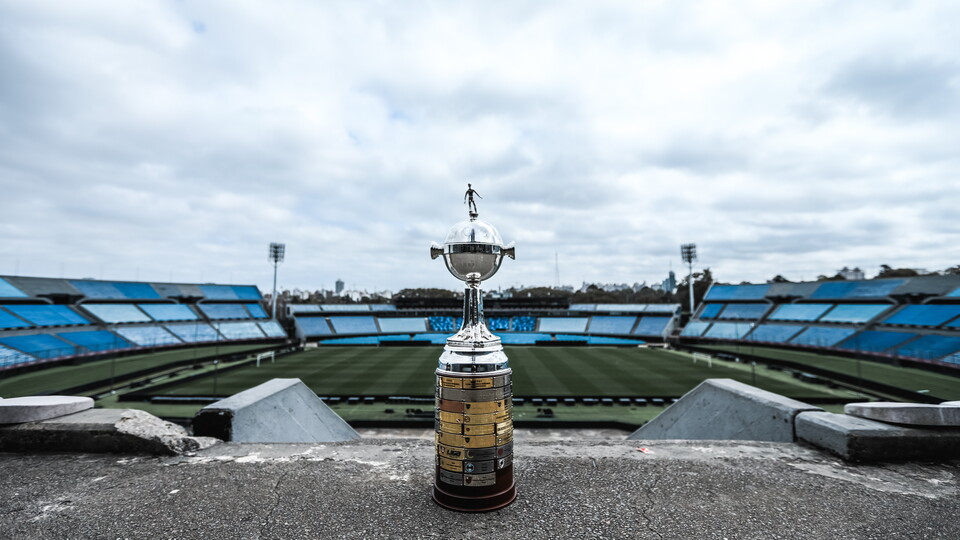
Mauro Boselli has yet to decide whether he will travel to watch the 2026 CONMEBOL Libertadores Final between Estudiantes de La Plata and Palmeiras at the Estadio Centenario. Emma, his eldest daughter, and twins Ginna and Sofía — all devoted Estudiantes supporters — are trying to persuade him to make the trip to Montevideo. “My eldest daughter is driving me crazy. These big, crowded occasions... I'm more reluctant; I'd rather watch it peacefully from my sofa,” admits Boselli, 41, who retired in December 2023 — after winning the Copa Argentina with Estudiantes — and now works as a football agent.
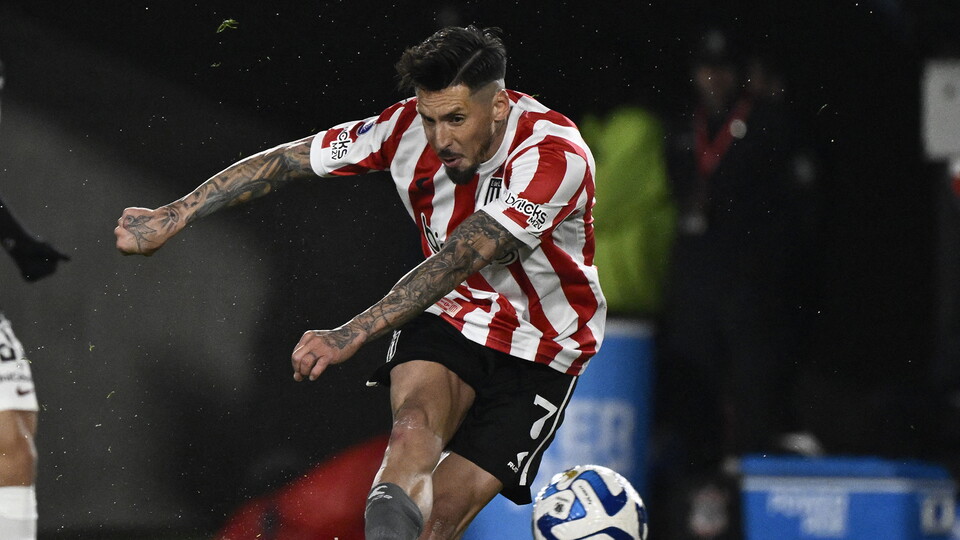
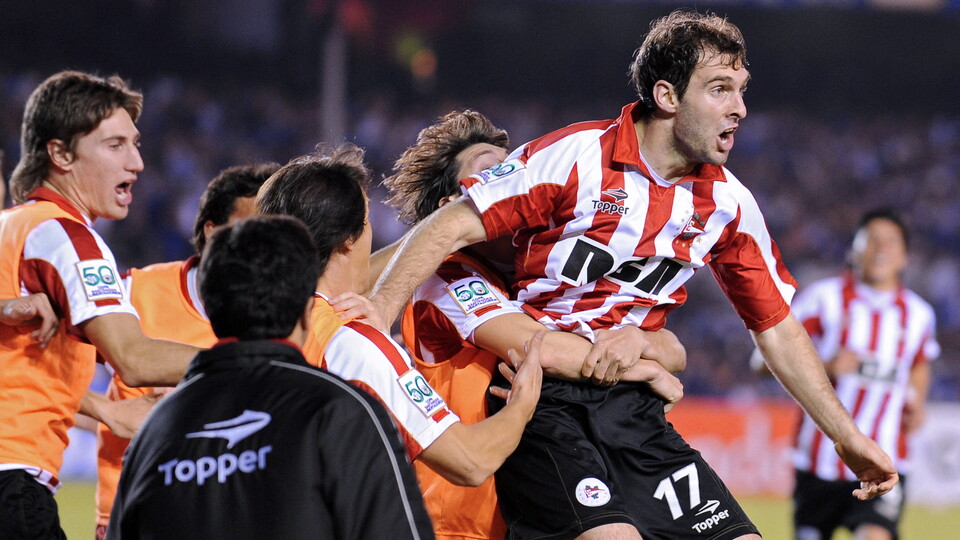
A CONMEBOL Sudamericana winner in 2004 and a CONMEBOL Libertadores champion in 2007 with Boca Juniors — playing a supporting role on both occasions — before taking centre stage in Estudiantes' 2009 CONMEBOL Libertadores triumph, Boselli is the club's joint all-time leading scorer in international competitions, with 21 goals, alongside Guido Carrillo. The ninth-highest scorer in Estudiantes' history, having enjoyed three spells at the club, he headed home the winner in the second leg of the 2009 CONMEBOL Libertadores Final to secure a 2-1 victory and the club's fourth and most recent title in the competition, cementing his status as an eternal Estudiantes icon. Known as 'El Matador', Boselli developed in Boca Juniors' youth academy after joining from All Boys alongside Carlos Tevez in 1996. He also finished as the top scorer of the 2009 CONMEBOL Libertadores with eight goals, thanks to that decisive header from a corner delivered by Juan Sebastián Verón, now president of Estudiantes.
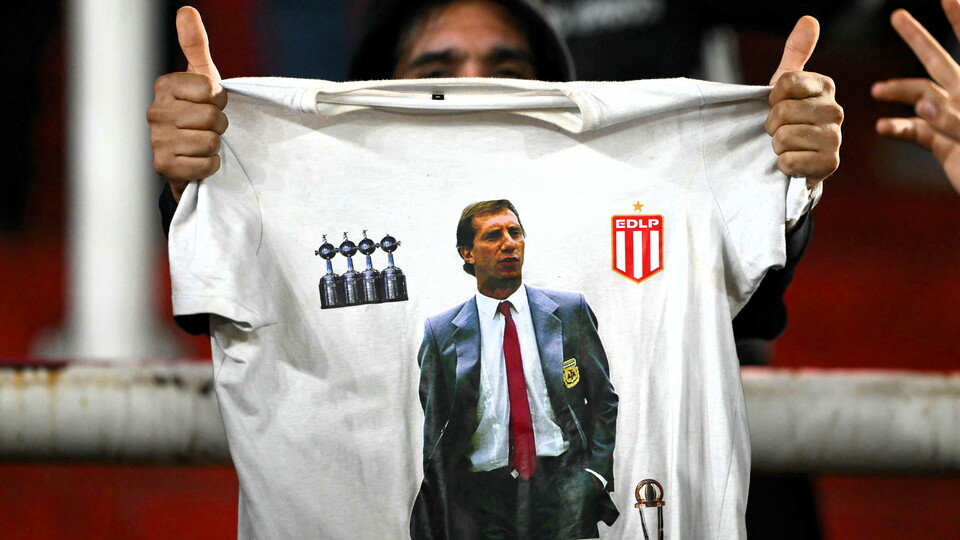
He played alongside Lionel Messi at the 2005 South American U-20 Championship in Colombia and made his senior Argentina debut under Diego Maradona in 2009. Now, Boselli speaks to CONMEBOL Libertadores about Carlos Bianchi — the coach who handed him his professional debut in 2003 — and Alejandro Sabella — with whom he achieved 'Eternal Glory' in 2009 —, about Juan Román Riquelme — now Boca Juniors president — and Verón, about his journey from Boca's youth ranks to becoming Estudiantes' No9, and about mystique and family. About football, and much more.
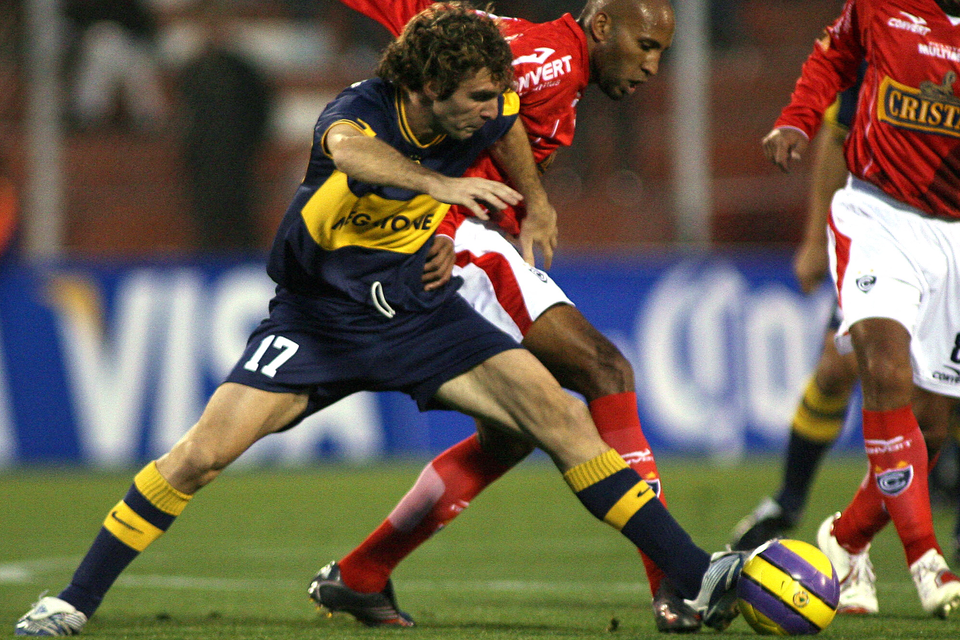
– How did Bianchi help you complete your development as a footballer?
– He was a role model for everyone of our generation because of everything he had achieved. He worked with large squads of 30 or 35 players and made every single one feel important. He prepared you to be ready whenever he needed you. When you reach the first team, you're not yet a fully developed player. And I had the opportunity to complete my development under him. Being coached by Bianchi was a dream.
With him, it was all about never giving up, always being ready, training at 100 per cent and fighting for your place because you never knew when he would give you an opportunity. He constantly emphasised that you had to be prepared because, in football, nobody tells you when you're going to play. And if you're not ready when your chance comes... You don't get endless opportunities, especially at Boca, where the competition for places is incredible.
Carlos paid attention to every detail. Once, he came into the gym after training, walked over to me and asked how I was doing. He was about to leave, but then came back and said: "When you start winning your battles against Flaco Schiavi, you'll be ready to play first-team football. If you can compete against him, one of the biggest and strongest centre-backs in Argentine football, you'll be able to hold your own against anyone." And then he walked away.
He didn't speak to the young players all the time, but when he did, it was because he wanted to tell you something that would stay with you. He made you a better player because competing against someone like that meant setting the bar incredibly high. As Carlos used to say, if you could hold your own against that beast, imagine facing a "normal" defender afterwards. You'd be ready for first-team football.
– Is there something that sets players developed in Boca's youth academy apart?
– Unlike in my day, young players today have more opportunities to establish themselves in the first team. If you don't perform well, football can be very cruel because there's always someone else waiting to take your place. But back then, it was extremely difficult to break into the team. Especially in my position, because we had Martín (Palermo).
Nowadays, you see players who might not even have had a chance to play in our era going on to make 60 first-team appearances for Boca. Young players really need to make the most of their opportunities because those established figures aren't there anymore. Playing at right-back when (Hugo) Ibarra was around was virtually impossible. He was an absolute beast, and taking his place was incredibly difficult. Those players stayed in the team for years. Martín, for example, played for a very long time.
There were exceptions, like Fernando Gago and Éver Banega. But in my position, it was much harder because I was competing with the club's all-time leading scorer and one of the greatest heroes in Boca's history.
It's not the only determining factor, but Boca prepares you to play anywhere. After that, everyone follows their own path and discovers how far they can go and what they're capable of. But coming through Boca's youth academy definitely gives you an edge.
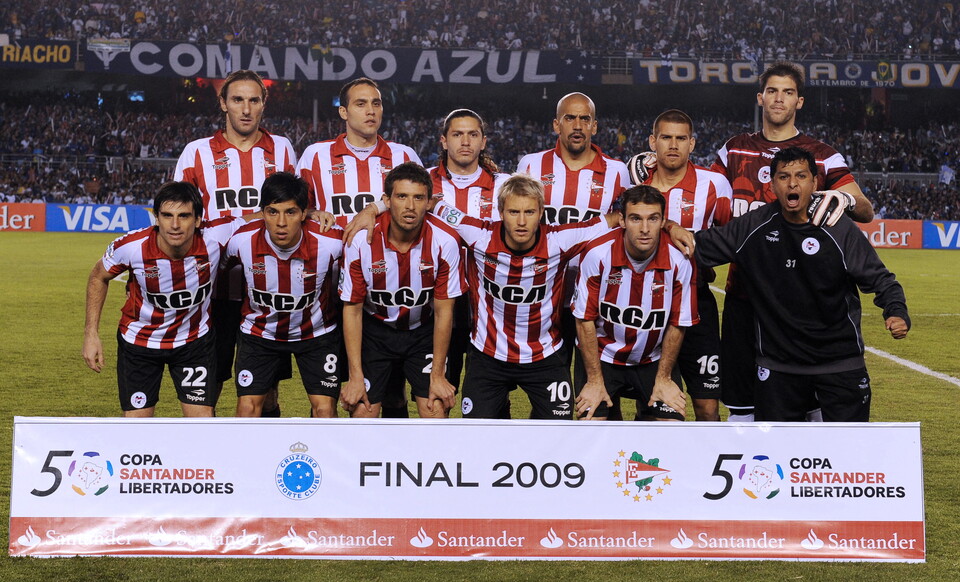
– What does the CONMEBOL Libertadores mean to you?
– Having experienced the 2000s, it almost seemed easy to win the CONMEBOL Libertadores. Now, with the benefit of hindsight, knowing that Boca last won it in 2007, when I was there, you realise just how difficult it is to win the CONMEBOL Libertadores, let alone twice. That's when you begin to truly appreciate its value and the magnitude of what it means to lift that trophy.
When you're still playing, especially at Boca, you almost take winning the CONMEBOL Libertadores for granted. The same goes for Estudiantes. It's been 17 years since Estudiantes last reached the Final and won it. Some journeys take a long time, and you have to appreciate those achievements because winning the competition is never easy, especially on such a regular basis.
The CONMEBOL Libertadores is the biggest competition in continental football. And I was fortunate enough to play for two clubs with a tremendous tradition in the tournament. Everything is experienced much more intensely. At clubs that have never won it, the competition isn't experienced in quite the same way as it is at Boca or Estudiantes.
When you arrive at the stadium, you realise it means something different to the supporters. Playing a domestic league match simply isn't the same as playing in the CONMEBOL Libertadores, whether at Estudiantes or Boca, despite the differences between their stadiums and the size of their crowds. The fans experience it in a completely different way.
– What does it take to be Estudiantes' No9?
– There was a turning point in Estudiantes' history: Sebastián (Verón)'s return. It changed everything, including the way the team played, although the club's identity and traditional footballing philosophy were never abandoned.
But when 'La Bruja' came back from Europe, he changed things slightly in terms of what it meant to play for Estudiantes, which had always been about showing grit and fighting until the very end.
We were an attractive team to watch, while still retaining all those qualities that have always defined Estudiantes. Sebastián was fundamental in bringing quality and that extra dimension to the team. He showed that, beyond winning at all costs, as the club's history demands, you could also bring something distinctive to the way you played.
I was a much more technical player than I was powerful, strong or quick. Heading was certainly one of my main strengths, but that also went hand in hand with the team around me. We played good football, so I didn't necessarily need the ball to be launched forward all the time.
If we had to go long and hold the ball up, we'd roll up our sleeves and do it, but the team had its own identity, its own style of play.
Today, perhaps Estudiantes don't have quite such a clearly defined identity or a team that plays almost instinctively together, but they have their strengths. There's a reason they've reached the Final, and they're very much in contention to win the title.
– They do have a No9 in Carrillo, who replaced you in your final appearance as a professional footballer, in the 2023 Copa Argentina Final.
– A lot of Estudiantes' play goes through him. He's a player who gives the team an outlet from the back, allowing them to play long balls and compete for second balls because he wins virtually everything in the air.
Sometimes, when things get difficult, those second balls and the work Guido does become really important because he's so strong aerially.
We were team-mates. He was very young when I was there the first time, just starting to make the step up to the first team. Then we played together again towards the end of my career, before I retired.
We played plenty of matches together, although there were others when we didn't. During my second spell, in 2023, we were room-mates when the team stayed together before matches. We have a very good relationship. Guido is a fantastic guy, and he genuinely loves the club because he came through its youth academy.
– With 14 goals, Carrillo overtook Juan Ramón Verón — Juan Sebastián's father — and you, who had scored 13 each, to become Estudiantes' all-time leading scorer in the CONMEBOL Libertadores.
– I don't play anymore, but when you're an active player, you always want to achieve things. I retired as the club's all-time leading scorer in the CONMEBOL Libertadores and in international competitions. That's as far as I can go. I can't come back and play again...
But it makes me happy because Estudiantes are a club with so much mystique in international competitions, and being up there in those rankings is one of the things football leaves you with when your playing days are over.
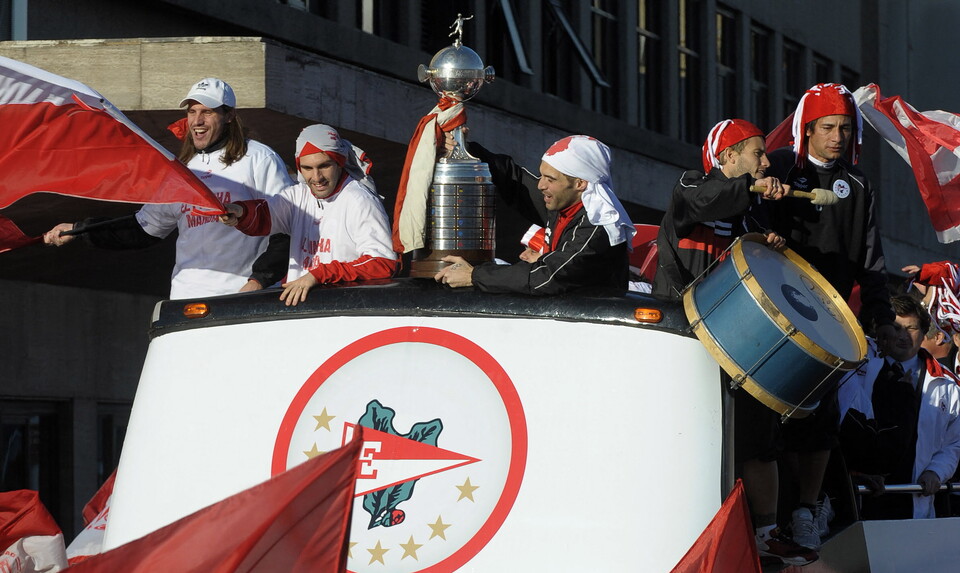
– What is Estudiantes' mystique, and what makes it so special?
– If you compare the current Estudiantes squad with Palmeiras', the logical conclusion would be: "That's it, Palmeiras are going to be champions." But when Estudiantes are involved, you can't say that, because you know something is going to happen, that they'll put up a fight and that, who knows, they might even take the trophy back to La Plata. With other teams, you know it's impossible. It just doesn't happen.
Mystique is about expecting what nobody else expects, about something unexpected happening. Take our match against Barcelona in the 2009 Club World Cup Final. If we played them another ten times, we'd lose by five goals because of the difference in quality between the squads. But we drew with them, took the game to extra time and came within two minutes of beating them. Those are epic matches that very few other teams could produce.
Mystique is knowing that, when things get tough, the team steps up, the group comes together and everyone finds something extra to give. You realise it when you're inside the club, because it's something you experience, something you feel, and then the results follow.
Estudiantes supporters know that: you're never out of it. That's what mystique is all about. Knowing that Estudiantes will always rise to the occasion when things get difficult.
Estudiantes aren't Boca or River. And that makes the club's history and everything you experience there even more valuable. I experienced it from the other side when I was at Boca and Estudiantes beat us to the 2006 Apertura title. Nobody believed they could become champions. It seemed impossible that we could lose that championship with Boca. But Estudiantes kept believing and ended up winning the title.
Estudiantes are a club defined by epic battles, by always taking on the toughest challenges. There's a supporters' group called "Solos contra todos" ("Alone Against Everyone"). That's exactly what it's about. And perhaps that's what makes the players find that extra level.
It's a history that not every club has, and I'm proud to be part of it. You identify with those values. And it's not just about playing football; it's a way of life: always thinking about others, not being self-centred and putting the group ahead of individual interests. That's part of the club's history.
– Is Estudiantes like a family?
– There's something Estudiantes do differently: players who leave want to come back, and they aren't tempted by money or by the chance to play for a bigger-name club. They either came through Estudiantes or the club left a lasting mark on their lives, as it did on mine.
It's the same with every generation, from Principito (José) Sosa to (Joaquín) Correa and Carrillo. It's something that defines the club's history. And players like (Gerónimo) Rulli, Juan Marcos (Foyth), Zaid Romero and (Benjamín) Rollheiser will come back too.
That allows the club to maintain a sense of continuity, connecting newcomers with those who came through the academy or achieved success there. Those players, in turn, pass on that identity and show the way to those arriving, whether from the youth ranks or other clubs. That's something Estudiantes have that other clubs don't.
– What did Alejandro Sabella mean to you?
– Perhaps it's quite a big comparison to make, but Alejandro's arrival at the club had a profound impact on me because it happened shortly after my father, Horacio, passed away. Alejandro was a man with the same values and a personality very similar to my father's.
My dad never got to enjoy the best period of my career. Having Alejandro around gave me a sense of comfort because I could continue sharing moments and experiences with someone who reminded me so much of my father. We became very close.
My father passed away in December 2008, so he never got to see us win the CONMEBOL Libertadores. When I joined Estudiantes, he was already ill. Ale arrived in March 2009.
Comparing Ale to my father might seem like quite a big statement, but that's genuinely how I felt. He was a wonderful human being, a genuinely good person who always put everyone else's well-being ahead of his own.
In 2009, when his own father passed away, Ale was still there, giving the team talk, barely able to speak. And that says everything about the kind of man he was, about how he always put the group before his own personal circumstances.
He left a lasting mark on me because, in him, I found someone so similar to the person I had lost only a short time before.
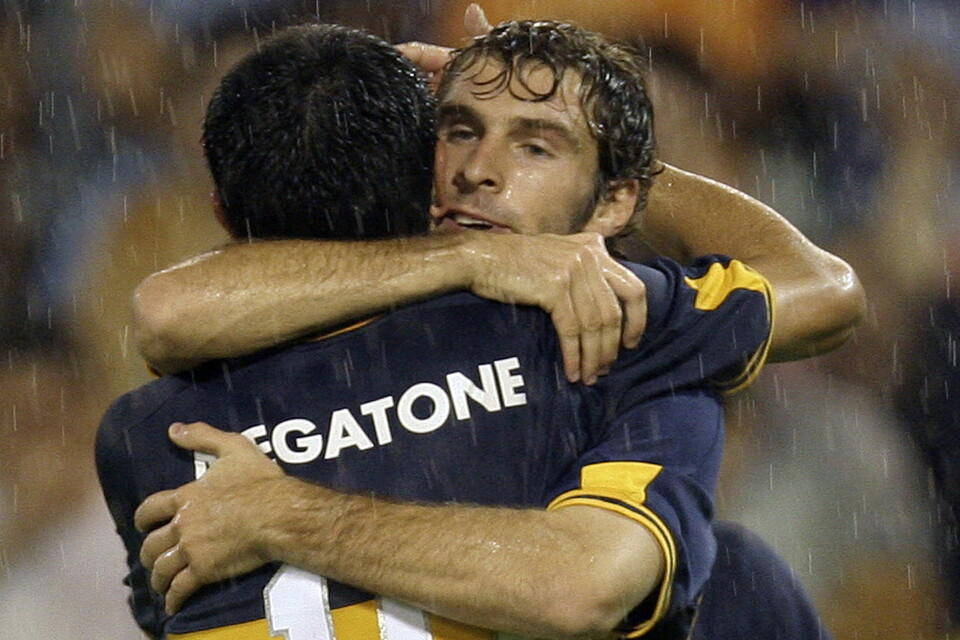
– Did you ever imagine Riquelme and Verón becoming presidents of Boca and Estudiantes? What were they like as team-mates?
– Verón, yes. Román, I might have imagined him becoming a sporting director. But they were both like coaches on the pitch, each in his own way because of their different personalities. They understood every aspect of the game, the different moments in a match, when to get angry and when to raise their voices. Two iconic figures in world football.
I was fortunate enough to experience some of the most important periods of their careers. What Román did for Boca in the 2007 CONMEBOL Libertadores was simply extraordinary. I got to see both of them at their very best. Sebastián was the standout player right up until his final match. It was unbelievable.
They're the kind of players who make you feel that, if they're on your team, you're going to win. That's how I felt about both of them. I got to enjoy playing alongside Verón much more than Riquelme because I didn't play as often at Boca.
But when you looked around and saw Riquelme or Verón beside you, you knew you had a great chance of winning. In fact, you felt there was very little chance of losing. And the opposition felt it too. You could see it, almost as if they were thinking: "How are we supposed to deal with this?"
– Verón delivered the ball straight onto your head for the winning goal in the 2-1 victory over Cruzeiro at the Mineirão in 2009, which secured Estudiantes' fourth CONMEBOL Libertadores title.
– I always tell him: "You just put the ball into that area. You weren't aiming for me. Don't try to act clever. You just whipped it into the box, hoping someone would get on the end of it." And he laughs.
It's not as though he was trying to put it in that exact spot. He sent the cross into the box and, luckily, I was the one who got there, although it could just as easily have been someone else.
I headed the ball and, because of the momentum of the header, I ended up facing away from goal. I didn't actually see the ball go in.
I made contact with the header, the defender knocked me off balance and I ended up looking towards the opposite goal. By the time I turned around, the ball was already in the net. And that feeling of joy is almost impossible to describe.
Scoring a goal in a match of that magnitude... And it meant absolutely everything: it made it 2-1, completed the comeback, secured the trophy and, with that goal, I became the CONMEBOL Libertadores' leading scorer.
There were so many things happening at once. It's incredibly difficult to put into words what goes through your mind in that moment, when you begin to realise the full significance of everything that's just happened.