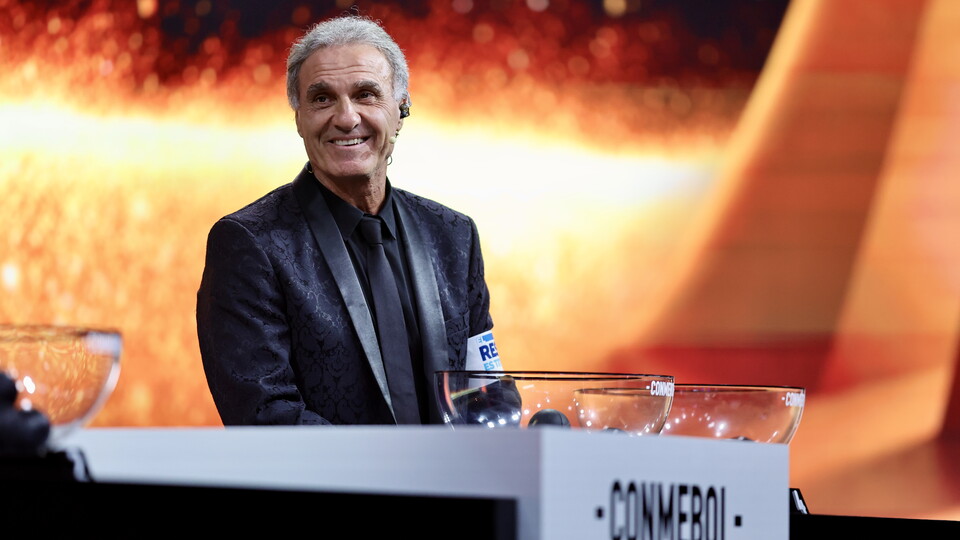
- The legends took center stage at the draw held at CONMEBOL’s headquarters in Luque.
- Felipe Melo and Oscar Ruggeri were responsible for drawing the balls for the CONMEBOL Libertadores.
At CONMEBOL’s headquarters in Luque, Paraguay, the draws for the group stages of the CONMEBOL Libertadores and the CONMEBOL Sudamericana were held, respectively.
Prominent figures from South American football were in attendance, presenting the official match ball for both competitions and also taking part in the draws at their respective pots.
Carlos Gamarra, the Paraguayan defender who captained his national team and enjoyed an extensive career across the continent, unveiled the official ball for both tournaments: the brand-new Cumbre.
René Higuita, the legendary Colombian goalkeeper who won the CONMEBOL Libertadores with Atlético Nacional (Colombia) in 1989, and the experienced Uruguayan defender Diego Godín—who took part in the 2006 edition wearing the Nacional (Uruguay) shirt—assisted in the CONMEBOL Sudamericana draw.
Higuita, who handled pots 1 and 2, highlighted the message of respect promoted by CONMEBOL.
Godín, for his part, emphasized that both in football and in life, this is the core value that must never be lost. He also praised the importance of both competitions and their steady, exponential growth, marked by the presence of so many historic figures over the years.
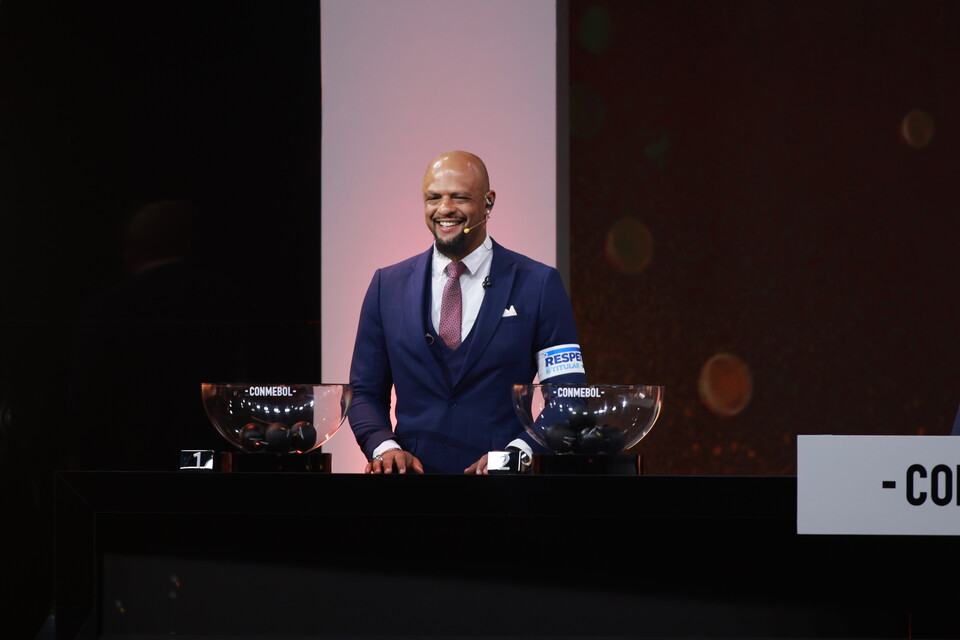
At the CONMEBOL Libertadores draw, the invited guests were Brazilian Felipe Melo—three-time champion of the competition (2020 and 2021 with Palmeiras, and 2023 with Fluminense)—and Argentine Oscar Ruggeri, who lifted the trophy in the 1986 edition with River Plate.
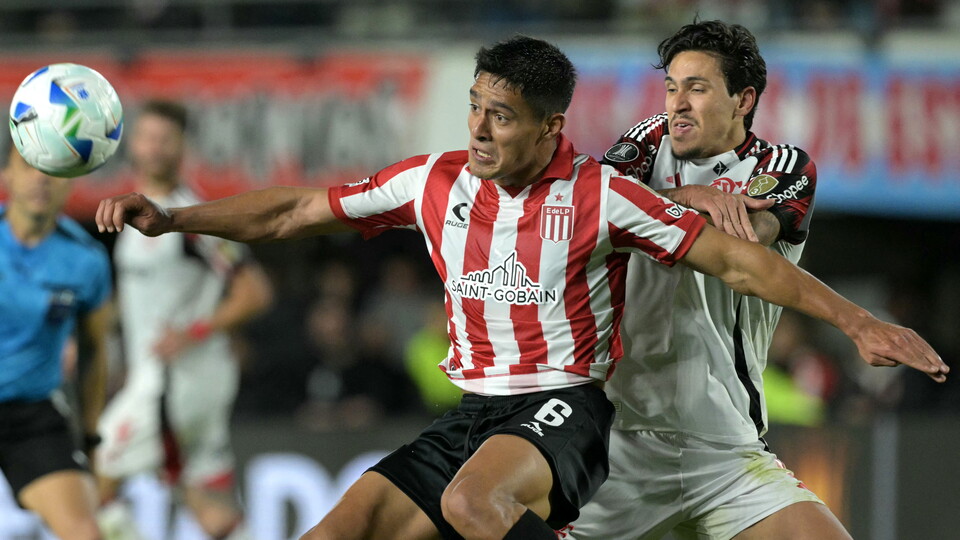
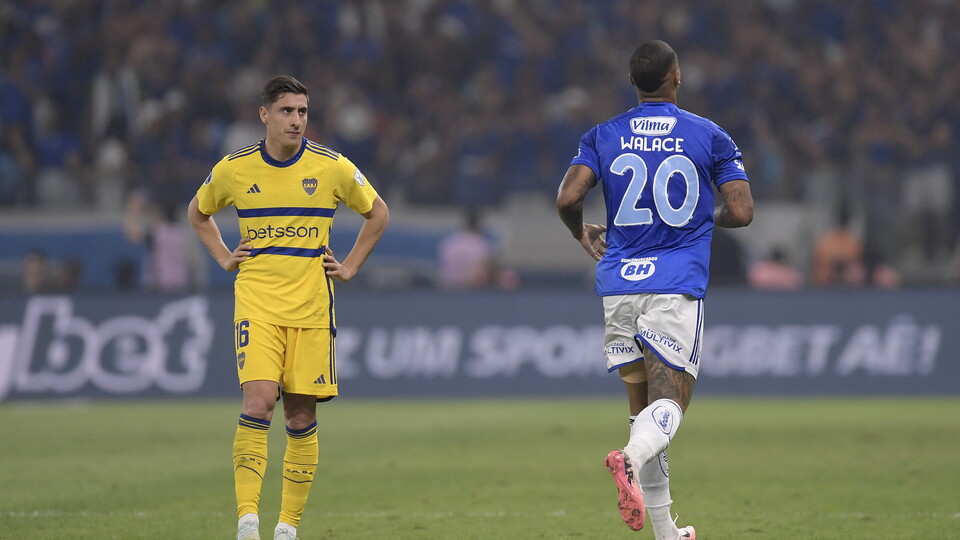
When asked about the strongest groups, Melo pointed to Group A—featuring Flamengo (Brazil), Estudiantes (Argentina), Cusco FC (Peru), and Independiente Medellín (Colombia)—as well as Group D, made up of Boca Juniors (Argentina), Cruzeiro (Brazil), Universidad Católica (Chile), and Barcelona (Ecuador), and Group F, comprising Palmeiras (Brazil), Cerro Porteño (Paraguay), Junior (Colombia), and Sporting Cristal (Peru).
Melo attended the CONMEBOL Libertadores draw for the second consecutive year. “It is a pleasure to represent Brazil here. I had the privilege of receiving the three trophies I won from the hands of Alejandro Domínguez, CONMEBOL President, and I am very grateful to him. It is an honor to be part of this event. We must not forget that the first thing a professional must have is respect,” he stated.
Ruggeri, for his part, emphasized the level of parity both competitions have reached and recalled his title with the Argentine club, then managed by Héctor Veira. “Being part of River’s first continental title was incredible. The club did not have that long-awaited trophy; we won it for the first time with a great team. The competitions have changed a lot—and for the better. From 1986 to today, there has been tremendous improvement in many aspects,” he concluded.
The Group Stages of both the CONMEBOL Libertadores and the CONMEBOL Sudamericana will kick off on Tuesday, April 7.
Different figures also shared their views on the draw and the future of their respective teams.
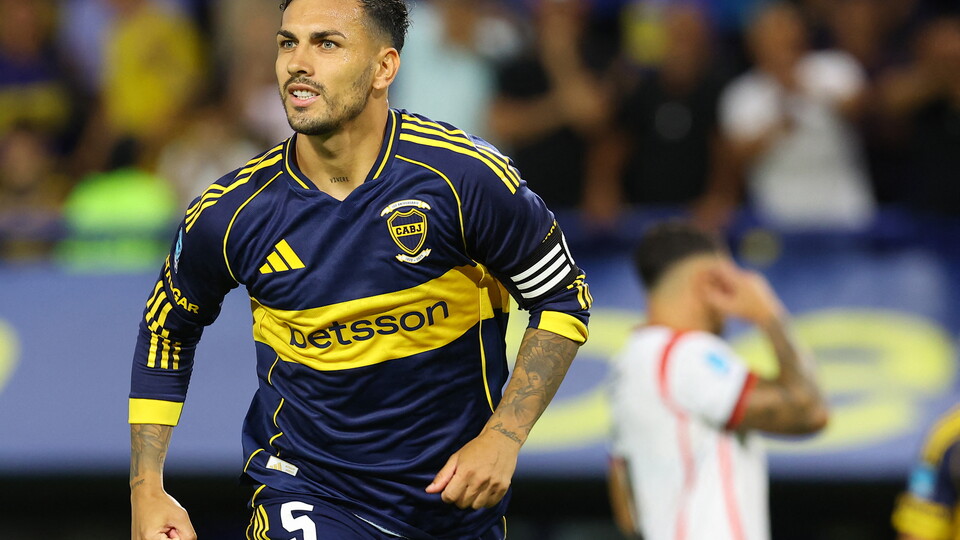
Juan Román Riquelme, President of Boca Juniors (Argentina) and a champion as a player with the club in the 2000, 2001, and 2007 editions: “Playing in the Copa always generates excitement, both within the squad and among our fans. We are very happy and proud to be participating once again because it is the most important competition of all. I say this because I know exactly what it means—it gave me the happiest moments of my career as a footballer. We will respect every team because they are all difficult. We dream of playing all 13 matches. We must trust our squad; there are many strong teams, but on the pitch it is always eleven against eleven, and anything can happen. For Boca, the Copa is everything—it is unique.”
Luiz Eduardo Baptista, President of Flamengo: “We have been drawn into more accessible groups in the past. Last year’s was extremely difficult. We have to work hard and approach it seriously; we will do everything within our power to be present in the final in Uruguay on November 28.”
Leila Pereira, President of Palmeiras: “I never say whether the group we were drawn into is good or bad. From experience, we know it is always very difficult. We must be prepared to face any team. Palmeiras’ advantage is that we know our opponents well. And we must not forget that humility is the greatest virtue—we have to keep our feet on the ground. God willing, we will reach the final in Montevideo.”
Marcelo Paz, Football Director of Corinthians (Brazil): “It is a complicated group. Platense qualified as champions. Independiente Santa Fe as well. Peñarol has already won the Libertadores. We have to prepare well. Six matches will be played between April and May, and we need logistical preparation, rest, and strong performances. Home matches will be very important. It is a high-level group.”
Gonzalo Belloso, President of Rosario Central (Argentina): “We have to travel to Ecuador, Venezuela, and Paraguay. It is a complex group for all four teams. Central is in a good moment to approach this Copa with energy. We will try to be as competitive as possible. In 2024, we entered the tournament in a difficult situation with Miguel Ángel Russo as head coach. Now we have backed Jorge Almirón, who has managed in two finals and knows what this competition is about. We have a deep, high-quality squad, and we have Angelito (Di María), who dreams of what we all dream of.”