In South America, where soccer is more than a sport, it's a way of life, stadium stands become vibrant venues for cultural expression, where popular music is intertwined with a passion for soccer. The relationship between grandstand songs and the most played sport in the world has deep roots that go back decades, creating a unique symphony that resonates in
every corner of the continent.The cry of the fans: a cultural phenomenon
The songs in the stands are not simply chords and lyrics; they are a reflection of the identity and history of the teams and their supporters. Each melody becomes the unofficial anthem that unites the fans, transforming the stadium into a sanctuary where the communion between music and football reaches its maximum expression
.Argentina: Overflowing Passion
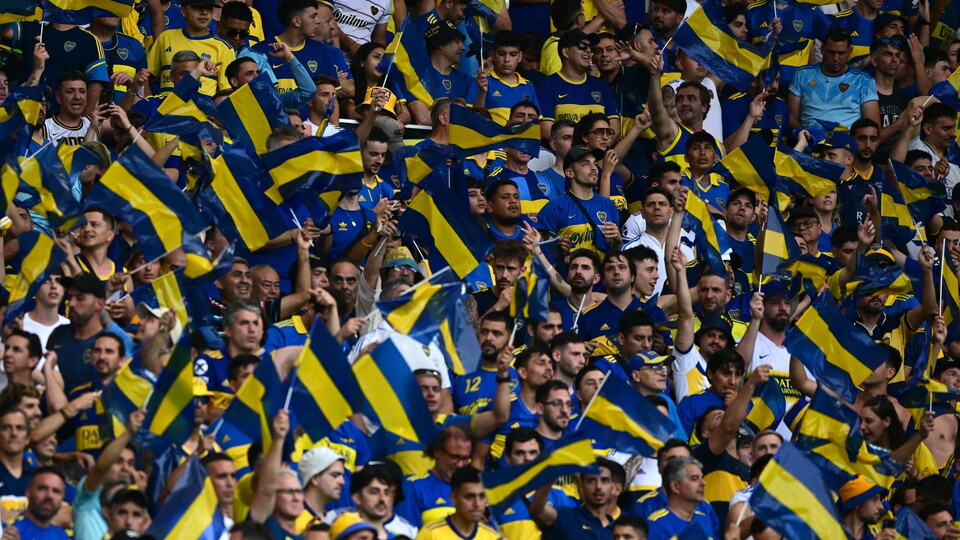
In Argentina, home to some of the continent's most iconic clubs, grandstand music has a distinctive flavor. Many of the songs, for export, were born on the courts of River, Boca, San Lorenzo, Vélez or other teams in the Argentine Republic. Next, we know the origin of some of them.
In the 80s, Argentinian fans exploited all their ingenuity to use court songs. They began to modify popular songs to suit their teams. On television, Alberto Olmedo, a renowned comedian, made young and old explode with laughter. He was accompanied by a musical group and from there they took a melody that became popular in any team close to being champion: “A gypsy woman told me, she said it to me with fervor...
”.“The Copa Libertadores is my obsession...”, all the fans sing, drinking “And give joy to my heart”, by Fito Páez, and even foreign music. Today in the stands of River and Boca you can hear a song by Creedence Clearwater Revival (Bad Moon Rising), or Pop Goes the World, by Men Without Hats (“oh, give it Bo, give it Bo...” or for River “Oh, let's go River Plate.. River Plate...).
It is very common for Argentine fans to sing “River” or “Boca” or “Racing” (etc.) but the first fan to do so was that of “the ravens”, San Lorenzo: “Cuervo, my good friend, this campaign we will be with you again...”. A melody that few people know. They adopted it not from a popular song, but from an advertisement. “Bobby, my good friend, you won't be able to come with me this summer”, an advertising jingle used by the Buenos Aires Police, for the operation carried out in the summer, to prevent citizens from taking pets
to the beach.Brazil: Samba and Unmistakable Rhythm
In Brazil, the birthplace of samba, the stands are filled with contagious rhythms that dance to the rhythm of soccer skill. The Flamengo fans, for example, sing the anthem “Eu Sou Flamengo,” a piece that has transcended the boundaries of the stadium to become an unofficial national anthem. The percussions and choruses mark an unmistakable beat that resonates in the Maracaná like an indelible echo
.Uruguay: Milonga and Garra Charrúa
In Uruguay, grandstand music is mixed with milonga, a form of local tango. The fans of the National Football Club celebrate with “Bolso, I love you so much,” a song that encapsulates the eternal devotion of the tricolor fans. Passion and claw blend together in each stanza, turning each encounter into
a unique emotional display.Chile: Cueca y la Fuerza de la Roja
La Roja de Chile has a crowd that radiates strength and pride in every match. “Chi, Chi, Chi, Le, Le, Le, Le” resounds in the stadiums, an adaptation of the Cueca, Chilean folk dance. This song, with its contagious rhythms, ignites the passion of the fans, becoming a musical standard that unites fans of different teams in the country
, under a single flag.