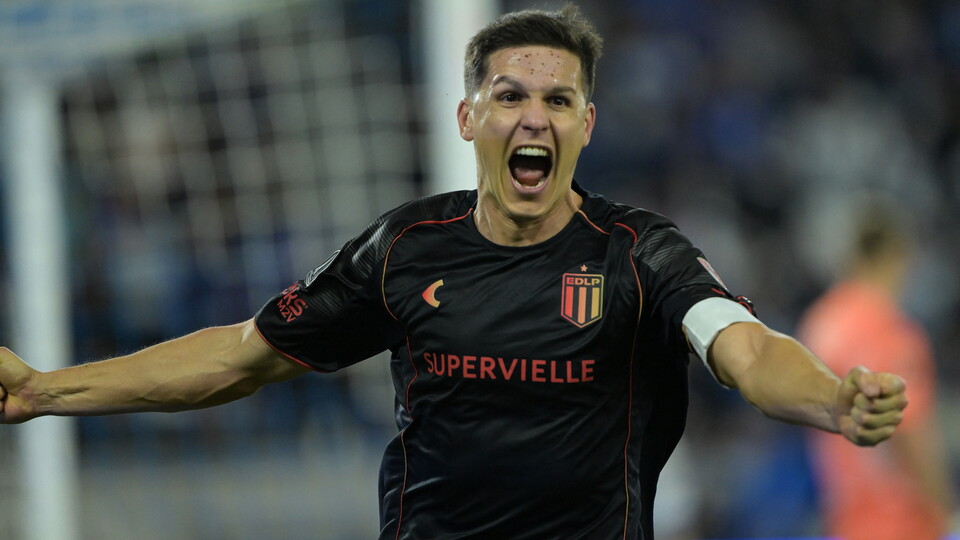
- Ahead of the CONMEBOL Libertadores final, the Estudiantes striker looks back on that night at the Maracanã and explains how the club passes on its passion for the Copa to its academy players.
- Carrillo recalls the eight days between the birth of his daughter and his goal in the final against Racing. He also explains why winning a header has more to do with timing than with how high you can jump.
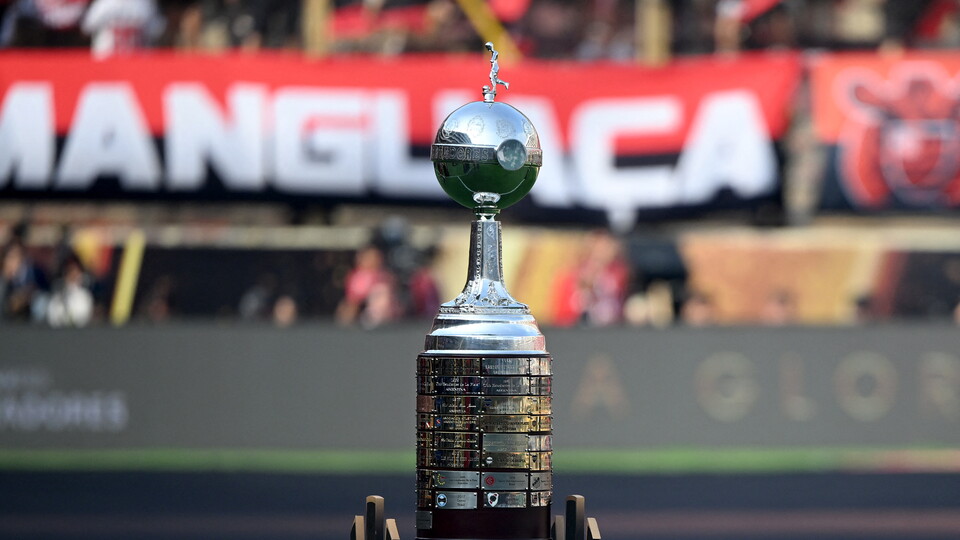
When Guido Carrillo talks about the CONMEBOL Libertadores final, he finds it easier to look back on that night at the Maracanã than to picture the evening of 28 November at the Centenario. The striker came through the ranks at Estudiantes and returned to give something back to the club. He prefers to take things one step at a time. In an interview with CONMEBOL, he discusses the La Plata club’s special bond with the competition and recalls a goal that, for him, captures something of the history of El Pincha. It was his 93rd-minute header in the final against Racing, eight days after his daughter was born.
CONMEBOL: What memories do you have of that night at the Maracanã?
Carrillo: The best you could ask for. It was a dream night, the way it all unfolded, how much we suffered and everything that happened along the way. To go to such an iconic stadium, face a team of that calibre with so many good players and come away with a place in the final, which was our main goal… It was a perfect night.
CONMEBOL: You know Estudiantes well. If you had to introduce the club to the world, what would you say?
Carrillo: I think people all over the world already know Estudiantes. The club is a lot of things. We always say we’re a family. A lot of people call us “the biggest family in the world”. But it’s also a feeling, a way of living by certain values and passing them on to the younger players so the club stays true to itself and always wants to keep growing. It’s about getting through the difficult times. It’s about suffering together. It’s a lot of things.
CONMEBOL: Is that how you’d describe the club’s DNA?
Carrillo: Yes, definitely. It’s a bit of everything. Especially in the Copa Libertadores. As the fans say, there’s always something special about it. I think that goes back a long way, to the titles the club won and the people who made history here and passed that feeling on. That’s how it reached us, and it’ll keep going from one generation to the next, with the young players who come through here at the Country Club training ground.
CONMEBOL: When you came back for your second spell at the club, you said you’d followed your heart. What does it mean to follow your heart?
Carrillo: I wasn’t the only one. A lot of the lads who go abroad have that sense of belonging people talk about. They want to come back and give something back to the club for everything it gave them. When you come through the academy here, you put down strong roots. You really feel part of the club. I think that’s the key to the work the club does with you from a young age.
And of course you dream of coming back one day so you can give something back, as I said. It gives me peace of mind and makes me happy to know that I can help the club that gave me my chance.
CONMEBOL: What does the club teach you as a youngster? What makes Estudiantes different in that respect?
Carrillo: It goes back to what I was saying about family. It’s the way people look out for the youngsters, the opportunities the club gives them, the academy accommodation, the people who work here. You come in and the security guys stop you at the gate for a chat. You get to the kitchen and there’s Mari, Eli, José… Everyone knows each other. Everyone plays a part in making it feel like a family here.
That’s especially true for the lads who come from a long way away, like Tucu, who was very young when he got here. You’re living in the academy residence, away from your family, but at the same time the club is like family.
CONMEBOL: What makes the CONMEBOL Libertadores different for Estudiantes? Why is it so special?
Carrillo: It was already special when I started playing here. It goes back much further than that. It feels different. The fans make sure you feel it too. There’s a special atmosphere. Those three Libertadores titles back in the day… I think that’s where it all started. Then La Bruja came along and won it too. It all feeds into that feeling. That’s why winning the Libertadores means more to our fans than anything else, and why they enjoy it as much as they do.
CONMEBOL: You’re a man of few words. Do you find it hard to put into words what the club means to you?
Carrillo: Yes, that’s partly my personality, but it also comes down to what I believe, how I see things. Words are important and they have value, but I think your actions are what make the difference in the end. That’s where the truth is. So I try to say as little as possible and do as much as I can.
CONMEBOL: You were captain here at 23, weren’t you?
Carrillo: Yes, I was.
CONMEBOL: And have you always been like that?
Carrillo: Yes, I have. Of course, you pick things up with time and experience. You spend time in different dressing rooms, you go through all sorts of things in football, and you learn to understand and appreciate things. We often end up trapped by our own words. It happens a lot in football. I try to avoid getting caught up in something I’ve said. There’s nothing wrong with doing things differently. This is just how I am.
CONMEBOL: I get the feeling you don’t want to say too much about what’s going to happen on the 28th either…
Carrillo: No. That comes from the club. It’s always been that way here. I don’t like getting ahead of myself or trying to predict what’s going to happen. I don’t think it does you much good. We’ve got to keep our feet on the ground, keep working and take it one step at a time until the day comes.
CONMEBOL: Let’s talk about what’s already happened, then. You’ve scored in several finals. Do you think things could come full circle on the 28th?
Carrillo: I hope so. I really hope it happens. What matters most to me is that we achieve what we set out to do. How we get there isn’t something I lose sleep over. But yes, I hope it happens.
CONMEBOL: Your daughter was born eight days before the final against Racing, wasn’t she?
Carrillo: The Racing final, yes. She was born on 5 December.
CONMEBOL: She was born on the 5th and the final was on the 13th. What were those days like, with a newborn daughter and a final to play?
Carrillo: There was a lot going on. The main thing, of course, was the birth of my daughter, but there was a lot happening on the pitch too. I’d been sent off in the league and given a four-match ban, and we had the derby coming up. Before that there was the game against Central, the guard of honour and all that. I missed all those games. I’d come in to train, but I couldn’t play. It was tough because we were in the play-offs.
And in the middle of all that, my daughter was about to be born. We drew Gimnasia at El Bosque and I couldn’t play in that one either. Those days were hectic. There wasn’t much sleep, but there was a lot of thinking. The team did a great job during that run.
Then came the final against Racing. I’d been getting ready for that game. I’d had a month to prepare and I knew it was my chance. It came in about the 93rd minute. Crazy. That’s Estudiantes for you. You can never think it’s over. You’ve always got to believe something can still happen.
CONMEBOL: You win a lot of aerial duels. How much of your heading ability comes from practice and how much is natural talent?
Carrillo: Some of it definitely runs in the family. My dad played. He made it as far as the reserves. My grandfather played too. They were both centre-forwards and they were good in the air, so that’s probably where I get it from.
Beyond that, I try to give the team what it needs at that point in the game. Sometimes we have to play quite direct. I tend to win a fair few of those duels, so we use them to start opening teams up.
CONMEBOL: At set pieces, how much comes down to what you practise and how much is the understanding between the player delivering the ball and the one heading it?
Carrillo: Practice helps. I think you see it a lot in the Premier League these days. Almost every set piece is a rehearsed routine now, with players making specific runs. Then you have to add the desire to win the ball, whether you’re attacking or defending, and the strength you can bring to the challenge in that moment. I think both things count.
CONMEBOL: What’s the most important part of the movement when you head the ball? Your leap, your upper body, your neck?
Carrillo: Timing. For me, timing is the most important thing. More important than the leap, more important than anything. It’s about meeting the ball at exactly the right moment. […] Sometimes you have to put some power into it. But meeting it on the run, at just the right moment, is what matters most to me.
CONMEBOL: For some of your goals, the ball seems to find you in the exact spot you’ve picked out in the box. Is that a striker’s instinct?
Carrillo: It’s practice. We work on it. The move the other day was something we’d rehearsed. In fact, we changed it at half-time. We’d been making that run towards the penalty spot, but we saw there might be a way in at the far post. It was El Cacique who spotted it. He called it.
A lot of the time it’s about starting your run at the right moment. The player delivering the ball matters too. Then there’s the one setting the block. Santi, El Cabeza, sets some good blocks. It’s all a team effort.
CONMEBOL: If you had to pick the three best set-piece takers who’ve set up goals for you, who would you choose?
Carrillo: That’s a tough one. João Moutinho at Monaco had a great delivery. There were a couple at Monaco. José as well. And let’s go with Chino, Chino Benítez. He was here when I was starting out. What a left foot! I’m leaving a lot of people out.
CONMEBOL: How much of your day do you spend thinking about the final?
Carrillo: Some days you think about it more. Other days you try to switch off. We’ve still got a few days to go, and we need to stay calm. Of course that’s difficult when it’s such a big game. But we can’t let that distract us. If we stay calm and focused, we’ll go to Montevideo in the best possible shape.
CONMEBOL: What do you think the atmosphere at the Centenario will be like on the 28th?
Carrillo: It’ll be a celebration. And I think the whole city of Montevideo will… The fans are going wild, and you can feel it. Everyone’s talking about tickets and places to stay. However much you try to shut it all out, word still gets through to you. It’ll be a day to enjoy, a day for the fans to enjoy. Hopefully in the best possible way. It’ll be spectacular.
CONMEBOL: And how do you picture the evening of the 28th?
Carrillo: I don’t, I don’t. I’d rather not picture it.
CONMEBOL: I’d like to show you a photo. [Carrillo is shown a photo from his academy days.]
Carrillo: Oh, the lads give me so much stick about my hair in this one.
CONMEBOL: Is that a famous photo?
Carrillo: Yes, the lads here bring it up every now and then. They used to say I had the flogger look.
CONMEBOL: Was that when you were playing for the Sexta youth side?
Carrillo: I think it was the Séptima. I was just starting out. Lovely, lovely memories. When you’ve been at the club since you were a little kid… It’s your family. I’m still close to people I met back then. So I’ve got the fondest memories of that time.
CONMEBOL: And what would you say to that kid?
Carrillo: I’d tell him to relax, that things will come. If you work hard, stay humble, live by your values and keep your feet on the ground, it all comes in time.