- Boca Juniors will play the CONMEBOL Sudamericana Final against Atlético Mineiro next Saturday, 21 November, in Barranquilla.
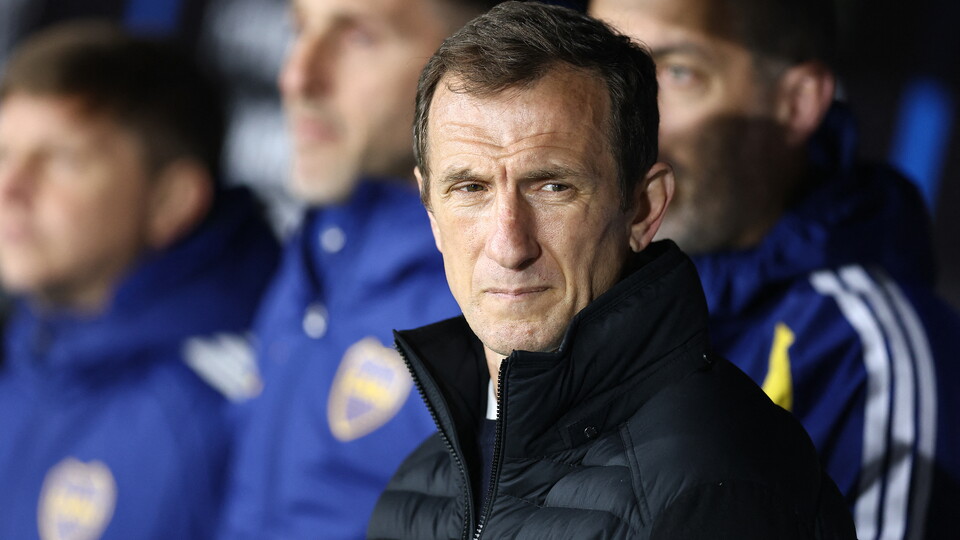
- For Rodolfo Arruabarrena, who already knows what it means to conquer the continent as a player for 'Xeneize', the challenge will be twofold: he will face his first decisive final as coach of the Argentine side.
The manager of the La Ribera side spoke to CONMEBOL just days before the decisive match against Atlético Mineiro, the competition's reigning runners-up. 'Vasco' discussed Leandro Paredes' leadership, the maturity he has gained in his role during his second spell in charge of the squad, how praise can do damage during good times, and how the team is preparing for a new challenge at the highest level.
Boca Juniors will be aiming to become the first team to win 'The Great Conquest' on three occasions. Eduardo Domínguez's side, who lost last year's Final to Lanús on penalties, will be looking to claim their first CONMEBOL Sudamericana trophy.
CONMEBOL: "Some time ago, during your first spell – quite a long time ago, in fact – you once said that 70% of the things you told the press were lies."
Arruabarrena: "Lies, yes, I still lie. Perhaps I'm older now and lie less. I put on a nice face and everyone believes me, but yes, we're probably down to 55% now. I'm older, more of a crybaby, more sensitive."
CONMEBOL: "In this journey towards the CONMEBOL Sudamericana Final, with the last tie being perhaps the most emotional part of the story, if you like, it has been a long road. And along that way, there was a particular protagonist: (Leandro) Paredes. Did you find him to be a leader? Did you talk about that role together, or how did it come about?"
Arruabarrena: "In the world of football, we all know each other. Obviously, through people close to him who work with him and people who work with me, we already knew each other or had good references. I knew that in this world, or at this club where everyone knows each other, he was a quality person, aside from the player he is. And obviously, once the president spoke to me and gave me the opportunity to make the decision to return, I leaned heavily on the leaders. And he is the leader. Then there are other lads who take on that leadership and support it. Many are role models in sporting terms, others professionally, and others haven't had any minutes on the pitch. I repeat, as I've said about Javier García, he's one of the lads who keeps the group together, who stays alert. With Leandro, it was much easier. They are positive leaders. And when you have positive leaders, the group naturally finds its way. And then, in this profession, you need good players. I have them, and I also have intelligent players, as Carlos (Bianchi) used to say."
CONMEBOL: "Against Vasco da Gama, he didn't play in the first leg, and in the second leg there was the whole situation with him being injured and needing to come on, or wanting to come on. How did that conversation go? How did you decide that he would play for a while?"
Arruabarrena: "We listened to him, to how he was feeling, and obviously there was the medical side of things as well. But often, your feeling comes from what you see in training. We were assessing the possibilities or visualising the kind of match we might have, and seeing at what point we could make the most of him. He's an intelligent player. He knew that, given the number of days involved, we were cutting it fine, but it was a match in which we could take a risk if the moment came, and that's what we did. It worked out well, it worked out well for everyone. If it had gone wrong, I'd have been slaughtered. I was prepared for that."
CONMEBOL: "The match ends, you realise he has scored the goal that sends you through, and you put a medal around your neck..."
Arruabarrena: "No, no. Because I've always said the same thing: a manager is there to make decisions. Just as I was left out of some CONMEBOL Sudamericana matches 10 or 11 years ago, or that famous CONMEBOL Libertadores match (the Round of 16 elimination against River Plate), perhaps back then we were a bunch of rubbish managers, or I was a rubbish manager. And now it's all praise, but I remain the same as ever. I've always said and stressed that praise does far more damage than criticism. In this case, I had to make a decision, it worked out well, especially for Boca, and for Leandro too, because he ended up scoring the goal and taking us through to the stage we're now at. But, well, these are decisions in which I listen to everyone: the doctors, the player – above all – and then our own feeling."
CONMEBOL: "Are you aware of how you celebrate goals?"
Arruabarrena: "Yes, I always celebrate them the same way."
CONMEBOL: "I want to show you a photo."
Arruabarrena: "Well, yes, I've already seen it on Instagram, on reels, and all those things we have nowadays that we didn't have back then. I jump less now (laughs), I'm older, my hip makes it harder. They're emotions and, obviously, I'm a supporter of the club, but, well, I'm in a different role now."
CONMEBOL: "Do you have a message for the fans ahead of the CONMEBOL Sudamericana Final?"
Arruabarrena: "The same thing I told them when we went to the Maracanã. That we should be hopeful, that we should go there with hope and with the desire to enjoy a Final, and obviously we want to win and will do everything we can to do so. There is also a team on the other side that I wish all the best, and I know they have a good group, a good team and a good manager. But we are Boca and we have to go out from the very start looking to win the Final."