- The ‘Millonario’ will compete in the CONMEBOL Sudamericana again after eleven years
- On March 19, they will discover their opponents for a campaign that will begin under new head coach Eduardo Coudet
There are moments that, over time, take on new meaning and acquire a significance that transcends the immediate result. In River Plate’s recent history, the 2014 CONMEBOL Sudamericana triumph also holds a symbolic place as a foundational milestone. In retrospect, that title represents the cornerstone of Marcelo Gallardo’s era—the starting point of a cycle that would transform the club into one of the main forces in South American football for more than a decade.
When Gallardo took charge in mid-2014, River was still going through a transitional phase. The team had just been crowned Argentine champions under club legend Ramón Díaz, but the arrival of a young coach with experience only at Nacional of Uruguay posed a different challenge: his ambition was to build a new identity, project domestic success onto the international stage, and establish the club among the continent’s elite. In that context, the CONMEBOL Sudamericana emerged as the ideal platform to begin shaping that vision.
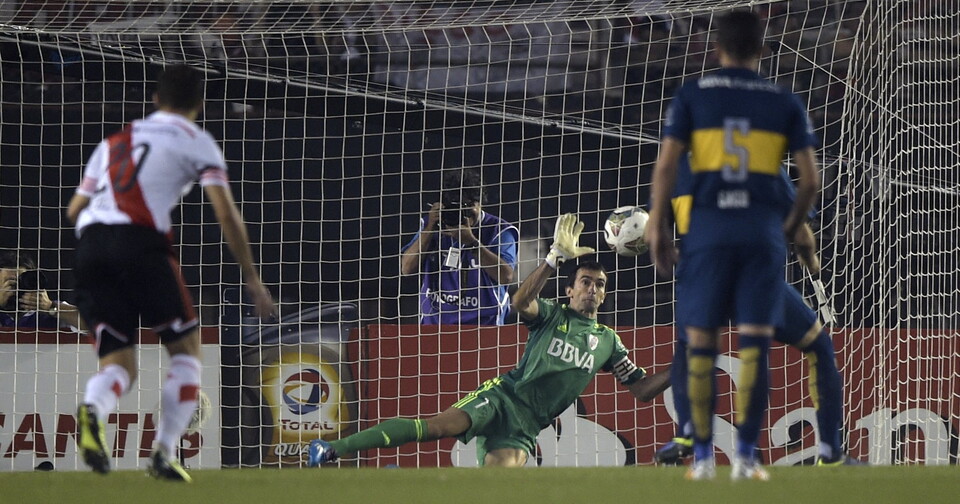
The campaign ultimately became a statement of intent, laying the foundations of River’s footballing DNA, its competitive mentality, and its ability to overcome moments of extreme adversity. River eliminated Godoy Cruz in the first round, staged a comeback against Libertad, and responded under pressure against Estudiantes before reaching a semi-final that remains etched in collective memory: the clash with Boca Juniors, highlighted by Marcelo Barovero’s penalty save from Emmanuel Gigliotti just three minutes into the match at the Monumental, stands as one of the iconic images of the club’s modern history.
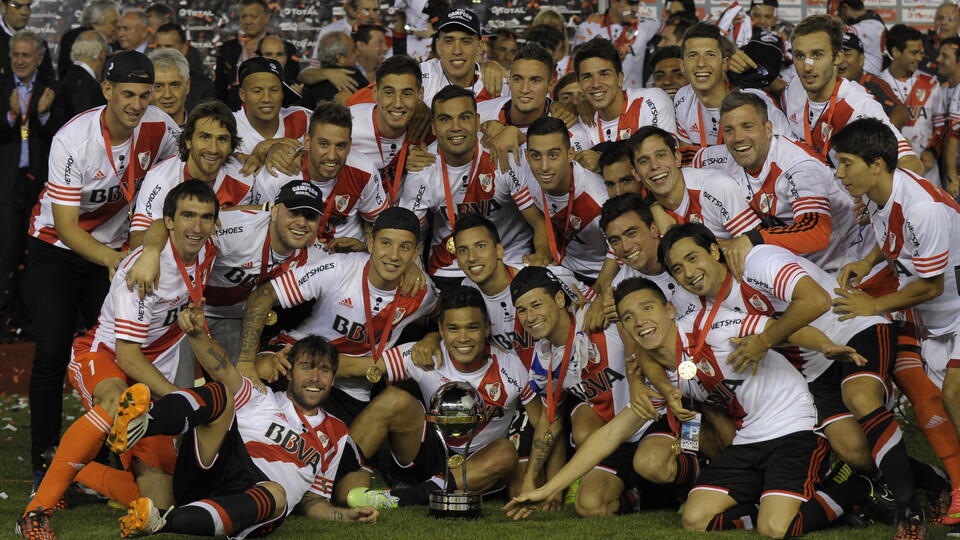
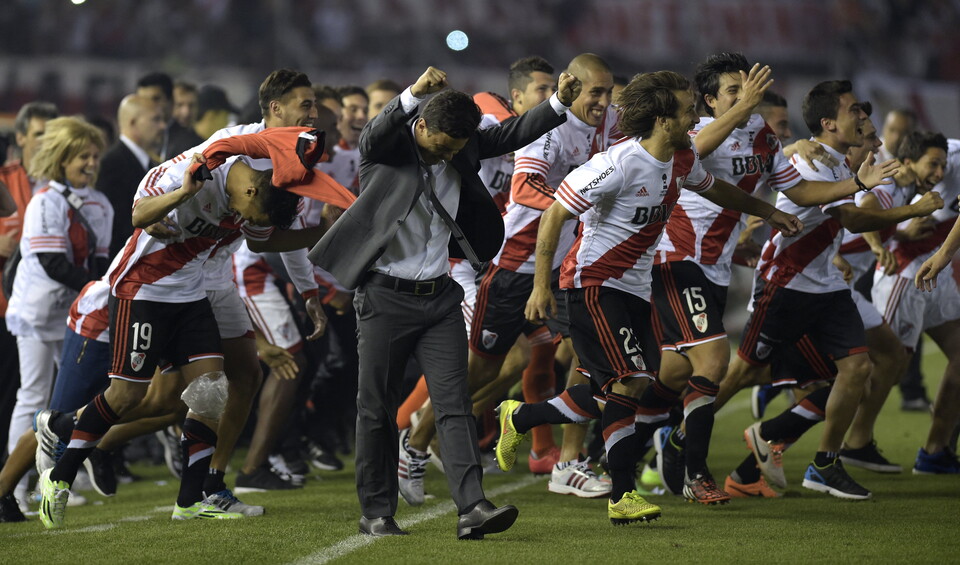
After eliminating their archrival—a shift in paradigm from the 2000–2004 period that would grow stronger in the years to come—River defeated Atlético Nacional at the Monumental to lift an international trophy the club had not celebrated since 1997. That night in December 2014 was much more than a title: it confirmed a way of competing, a mindset, and a footballing identity that would go on to shape an era. With high pressing, intensity, and a constant ambition to take control, Gallardo’s River found in that triumph the first major validation of its project.
That night, no one could have imagined everything that would follow. In the years that came next, the Millonario went on to win the 2015 CONMEBOL Recopa Sudamericana, the 2015 CONMEBOL Libertadores, lifted the Libertadores again in 2018 in the memorable final against Boca Juniors, and added a collection of international trophies that cemented one of the most successful cycles in its history. Gallardo had transformed the club forever.
More than a decade later, the calendar places River back in the CONMEBOL Sudamericana under very different circumstances—yet still loaded with meaning. With Eduardo Coudet as the new head coach following the abrupt end of Gallardo’s second spell, El Millonario begins a new cycle aimed at rebuilding its identity in order to once again become a dominant force, first domestically and then across South America.
After an inconsistent 2025, the Núñez side finished the year as the fourth-best team in the overall standings. While the priority had been to remain in the CONMEBOL Libertadores, their participation in the Sudamericana could provide the ideal platform to strengthen the foundations of this new era—just as it did back in 2014.
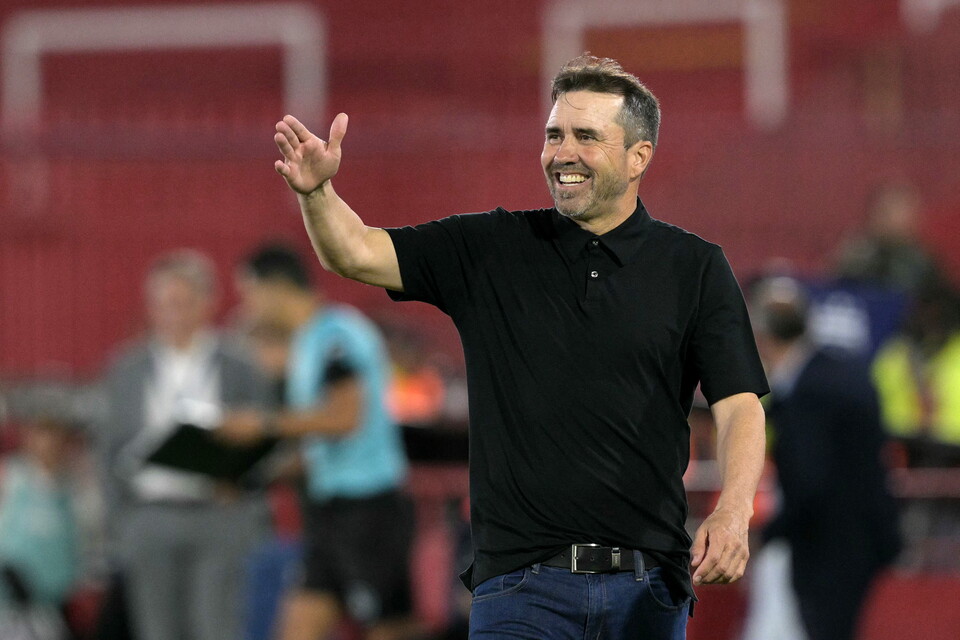
Following Gallardo’s departure, Coudet stepped down from his role at Spain’s Alavés to fulfill one of the biggest dreams of his managerial career. He was officially presented on March 4 at the Monumental. “The DNA of my teams aligns closely with what the club’s fans want. We need to build a team that takes the initiative,” he said during his unveiling. “All coaches must adapt to the characteristics of their players. You have to convince them of an idea, a style, and then work on it. I like physical, aggressive teams that are always looking toward the opponent’s goal.”
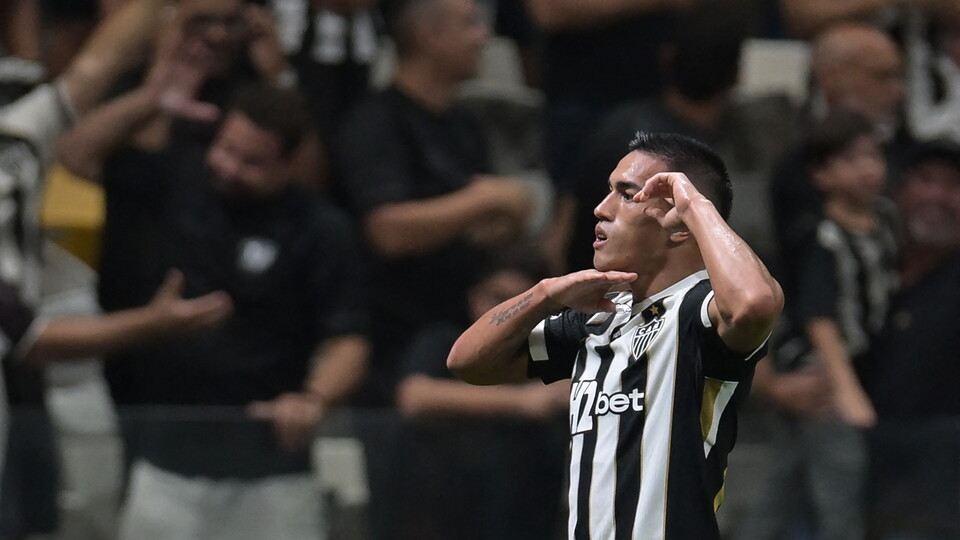
Tasked with leading a sporting renewal in Núñez, Chacho returned as head coach to the club where he had two spells as a player. Although only a few weeks into the job, the new manager has already begun to leave his mark on the team’s structure: he reshaped the system, handed a starting role to Ecuadorian youngster Kendry Páez, and revitalized the team’s dynamics with a playing style defined by intensity and attacking aggression.
River has started to show signs of that evolution, first in their opening win away to Huracán and then against Sarmiento at the Monumental. In this context, the CONMEBOL Sudamericana emerges as fertile ground to continue developing that vision. Continental tournaments often have the power to shape identities, strengthen squads, and create defining milestones that ultimately guide sporting projects—something River knows well, having begun one of the most glorious chapters in its history back in 2014.